Retreat vs. Vacation: How to Know Which One You Really Need
By Jonathan Miksis · Updated · 6 min read

I have taken a lot of trips. After 8+ years on the road and 73 countries, I have learned that not all travel does the same thing. Some trips empty your inbox for a week. Others change the way you live when you get home.
That is the real difference between a vacation and a retreat. Both have their place. The trick is knowing which one your life is actually asking for right now.
What a vacation is good for
A vacation is rest and reward. You step away, you sleep in, you eat well, you see something beautiful, and you come back recharged. Nothing wrong with that. We all need it.
But here is the pattern a lot of high performers notice: the recharge wears off fast. You land back home, the notifications start, and within a week you feel exactly like you did before you left. The trip was lovely. It just did not change anything.
If you are genuinely depleted and you only need a break, take the vacation. Book the beach. You do not need a retreat to lie in a hammock.
What a retreat is good for
A retreat is built around change, not just rest. The point is not to escape your life. It is to step out of the noise long enough to see it clearly, then come home with something you can actually use.
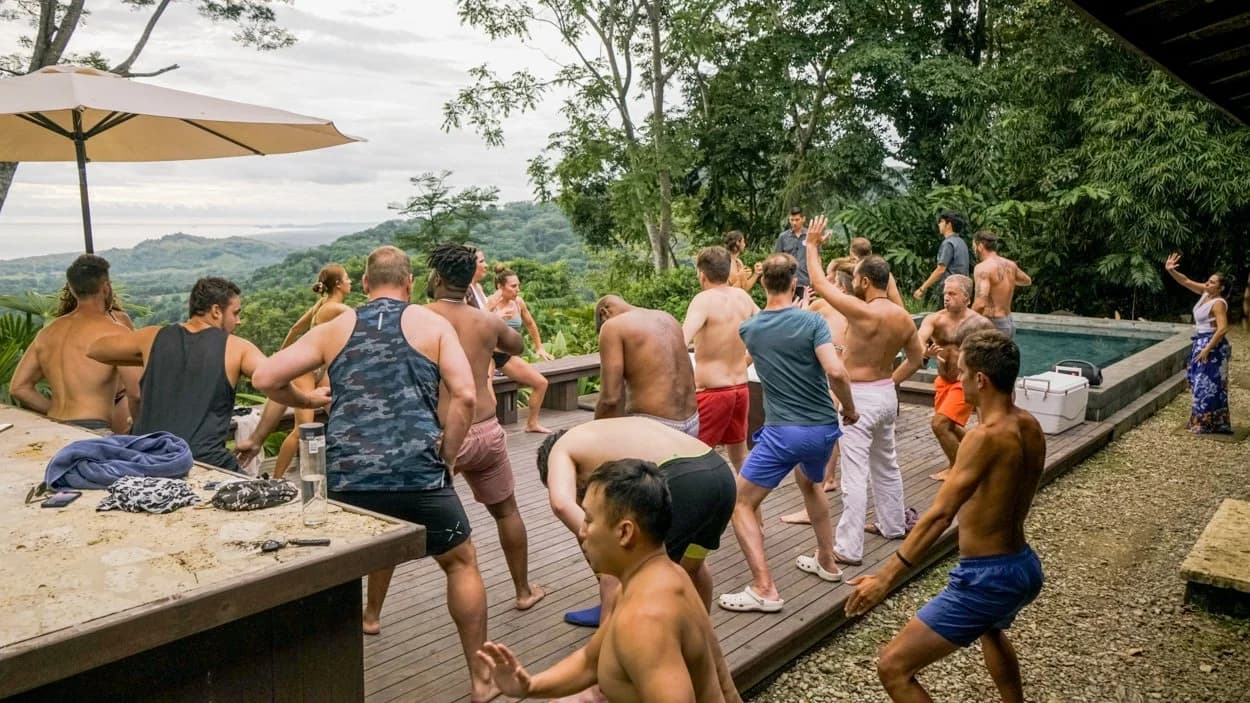
On the retreats I host and attend, the days are designed: time in nature, nervous system work like breathwork and cold immersion, honest conversation in a small group, and real space to think about your next chapter. You are not performing. You are not managing your phone. Your attention comes back to your body, your breath, and the people in front of you.
You leave with more than photos. You leave with a new baseline for what "normal" can feel like, plus a few clear next steps you were too busy to see before.
Side by side
| Vacation | Retreat | |
|---|---|---|
| Built around | Rest and enjoyment | Change and clarity |
| Who designs the days | You do | A facilitator does |
| Typical company | Family, friends, partner | Strangers who become close fast |
| Phone | On, mostly | Off, usually by agreement |
| A good day feels | Easy | Sometimes uncomfortable, then clearer |
| You come home with | Rest and photos | Decisions and a new baseline |
| Fades in | A week or two | Months, if you integrate it |
| Rough cost | Whatever you choose | $1,500 to $8,000, plus flights |
Neither column is better. They are answers to different questions.
A quick gut check
Ask yourself which of these is more true right now:
- "I am tired and I just need to unplug for a week." That is a vacation.
- "On paper everything is fine, but I feel scattered, stuck, or like there is more in me." That is a retreat.
Burnout that looks like exhaustion usually wants rest. Burnout that looks like you are doing everything and still feel flat usually wants a reset. The second one rarely gets fixed by another beach week.

The part most people skip
Whichever you choose, the real value shows up after you get home. A vacation fades in a week if you change nothing. A retreat fades too, unless you protect the things that worked: the morning walk, the cold shower, the honest check-in with yourself, the boundary you finally set.
Integration matters more than the high. What you do in the 30 days after is everything. The trip is the spark. Your daily life is whether it catches.
Can a vacation do the job?
Partly, and it is worth knowing exactly where the limit is.
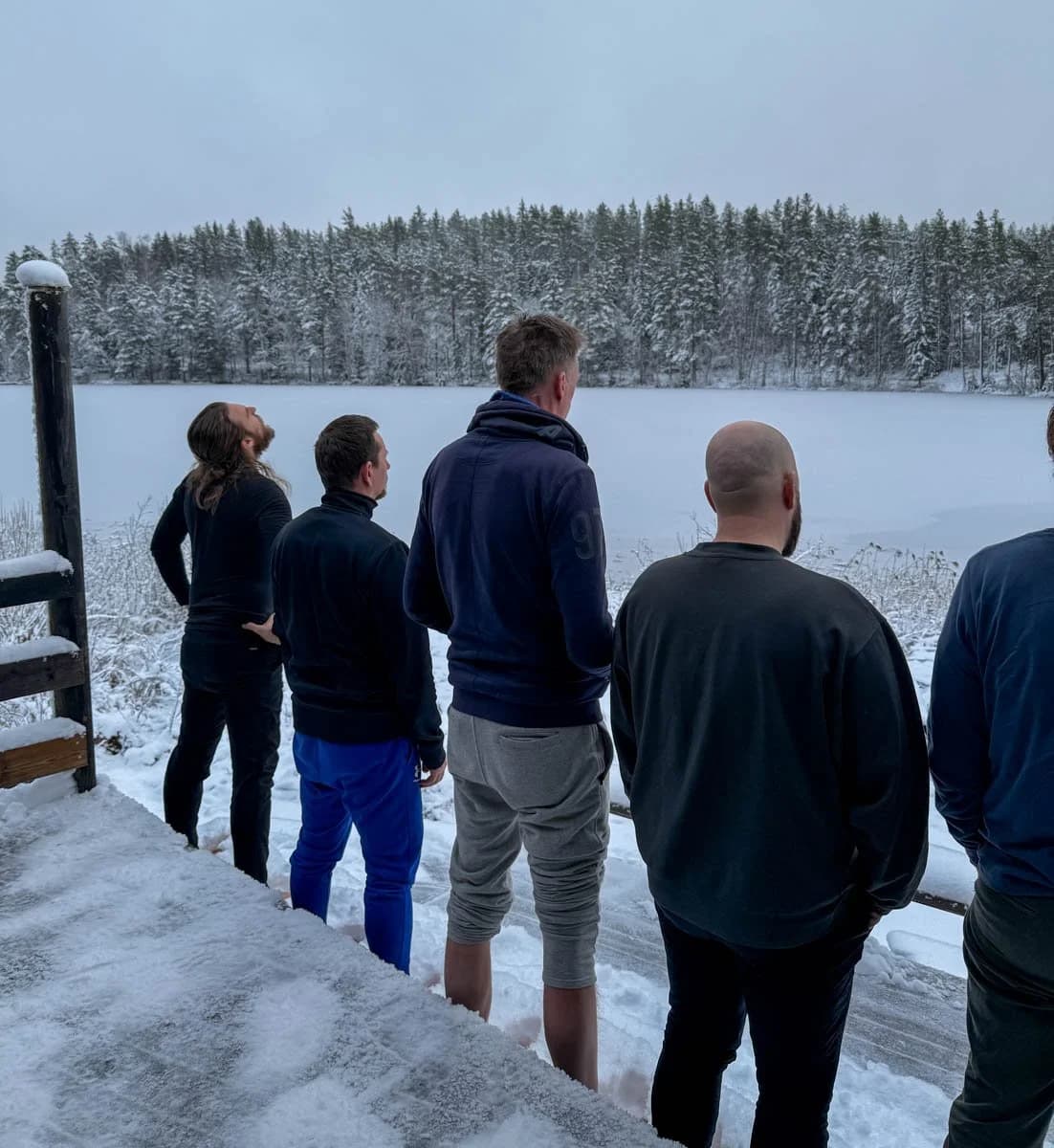
You can build a lot of a retreat on your own. Go somewhere quiet. Leave the phone in the room. Walk for four hours a day. Journal in the morning before you look at anything. Swim in cold water. Eat simply. Talk to no one for a couple of days. People consistently underestimate how much this alone can shift.
What you cannot manufacture is the other two thirds. A facilitator who can see the thing you are carefully walking around, and who has the experience to name it at the right moment. And a small group of people with no history with you, being honest in front of you, which is what makes it feel safe to be honest yourself.
That combination is the actual product. Location is just the setting it happens in.
So if money is tight or you are not ready to commit, take the solo version. It is genuinely useful. Just do not conclude from a quiet week alone that retreats are overrated. You tried a third of one.
How long each one needs
A vacation works at almost any length. A long weekend somewhere pleasant does what it is supposed to do.
Retreats do not compress well. The first day or two is mostly your nervous system unwinding, and until that happens you are not really available for the work. Three to four days is the practical minimum, and five to seven is where the deeper shifts tend to land. That is why most serious retreats run Thursday to Sunday at the shortest.
If you only have two days, take a vacation. You will get more out of it.
Signs you booked the wrong one
You booked a vacation and you needed a retreat if you came back rested and within ten days felt exactly as flat as before you left. That is not a failure of the trip. Rest was never the missing ingredient.
You booked a retreat and you needed a vacation if you spent the whole thing wishing people would stop asking you questions and let you sleep. If you are genuinely depleted, structured work is the last thing your system wants, and a good facilitator will spot it. Go and lie down somewhere first, then do the work later.
So which one?
If you need a break, take the vacation and enjoy every minute of it. If you keep feeling that quiet pull toward something deeper, a reset rather than an escape, that is worth listening to.
If you are leaning toward a retreat, the next questions are which one and what it should cost, and I have written both up: five questions to ask before you book and what a transformational retreat really costs.
If that is you, take a look at the retreats I am running this year, or just tell me a little about where you are and I will help you figure out whether a retreat is the right next step. Sometimes it is. Sometimes the honest answer is "book the beach first." I will tell you either way.
Frequently asked questions
What is the difference between a retreat and a vacation?
A vacation is built around rest and enjoyment: you choose what to do each day and the goal is to come back recharged. A retreat is built around change: the days are designed by a facilitator, there is structured work like breathwork, reflection, and honest group conversation, and the goal is to come home living differently. A vacation restores your current life. A retreat questions it.
Is a retreat more expensive than a vacation?
Usually yes per day, because you are paying for facilitation, a small group, and all-inclusive logistics. Most multi-day transformational retreats run roughly $1,500 to $8,000 before flights. The fairer comparison is not against a holiday but against another year at your current baseline.
Can I turn a vacation into a retreat?
Partly. You can create solitude, leave your phone in the room, walk for hours, and journal, and that genuinely helps. What you cannot manufacture alone is a facilitator who sees your blind spots and a group of strangers being honest in front of you. Those two things do most of the heavy lifting on a real retreat.
How long should a retreat be?
Three to four days is the practical minimum, because the first day or two is mostly your nervous system unwinding. Five to seven days is where deeper change tends to happen. Anything under three days is a workshop with accommodation, which can still be useful but is a different thing.
Do I need a retreat if I am just burnt out?
Not necessarily. Burnout that looks like exhaustion usually wants rest, and a beach will serve you better and cost less. Burnout that looks like doing everything competently and still feeling flat is the kind a retreat addresses, because that is a direction problem rather than an energy problem.
Can I go on a retreat with my partner?
Some retreats welcome couples and some deliberately do not, because people tend to process through their partner rather than sitting with something themselves. Both formats are legitimate. Check before you book, and be honest with yourself about which one you are actually after.
Hear when 2027 dates open
I run a small number of retreats a year. I email when dates open or a spot frees up, and not otherwise.
No spam, and unsubscribe any time. See how your details are handled in the privacy policy.