What Men’s Retreats Really Are (And Why They’re Rising Fast in 2026)
By Jon Miksis · Updated · 26 min read
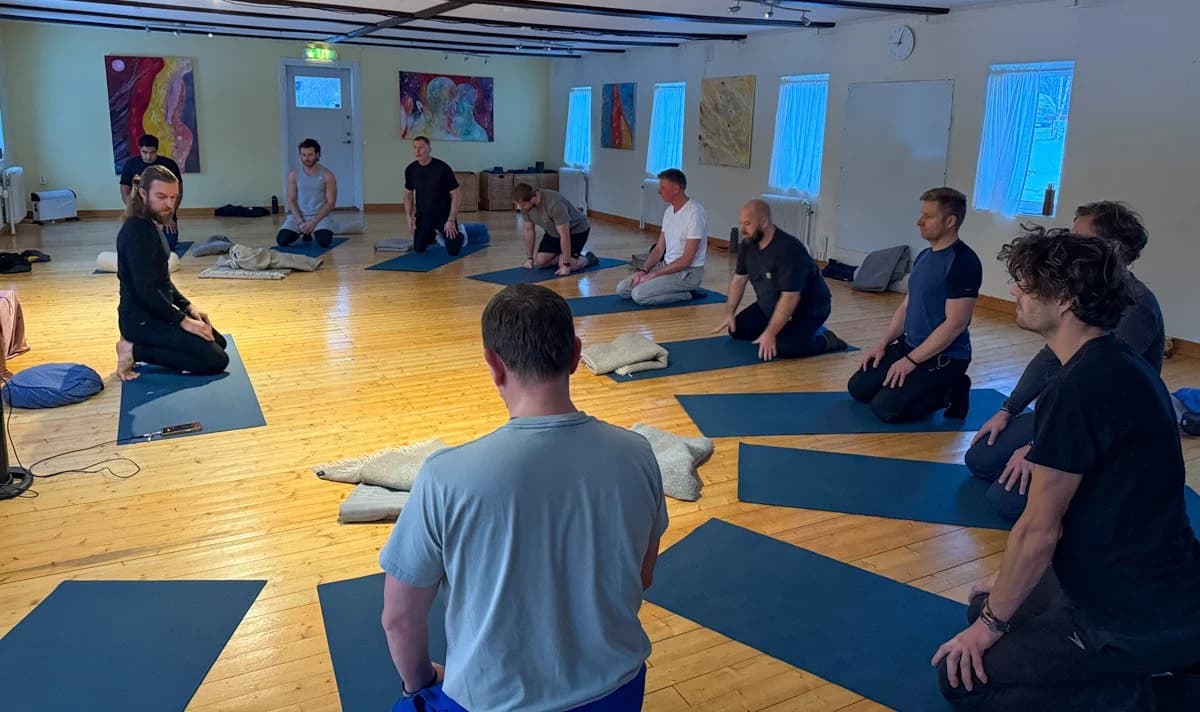
Most men have no idea what actually happens at a men’s retreat. The stereotypes are ridiculous, either soft, spiritual, and full of guided sharing circles, or military-grade discipline with ice baths, yelling, and “toughening up.”
In reality, modern men’s retreats in 2026 sit somewhere entirely different. They’re built for high-performing men who are tired of living life in sixth gear, who feel stretched thin by responsibility, and who crave a space where they don’t have to perform or pretend everything’s fine.
These men aren’t just looking for motivation. They’re looking for clarity, nervous system capacity, and brotherhood…tools for navigating a world that’s shifting faster than most people can keep up with. That’s what brought me to into this world 4 years ago - and why I enjoy facilitating men’s retreats to this day.
There’s no shortage of women’s retreats out there. Men deserve a space like that too, a place to grow, share, and level up together. Here’s what men’s work is all about in 2026, plus what to expect if you’re thinking of joining in.
If you already know you want to go and just need to find one, I have written a region-by-region guide to men’s retreats in the US, and a separate one for founders and leaders.
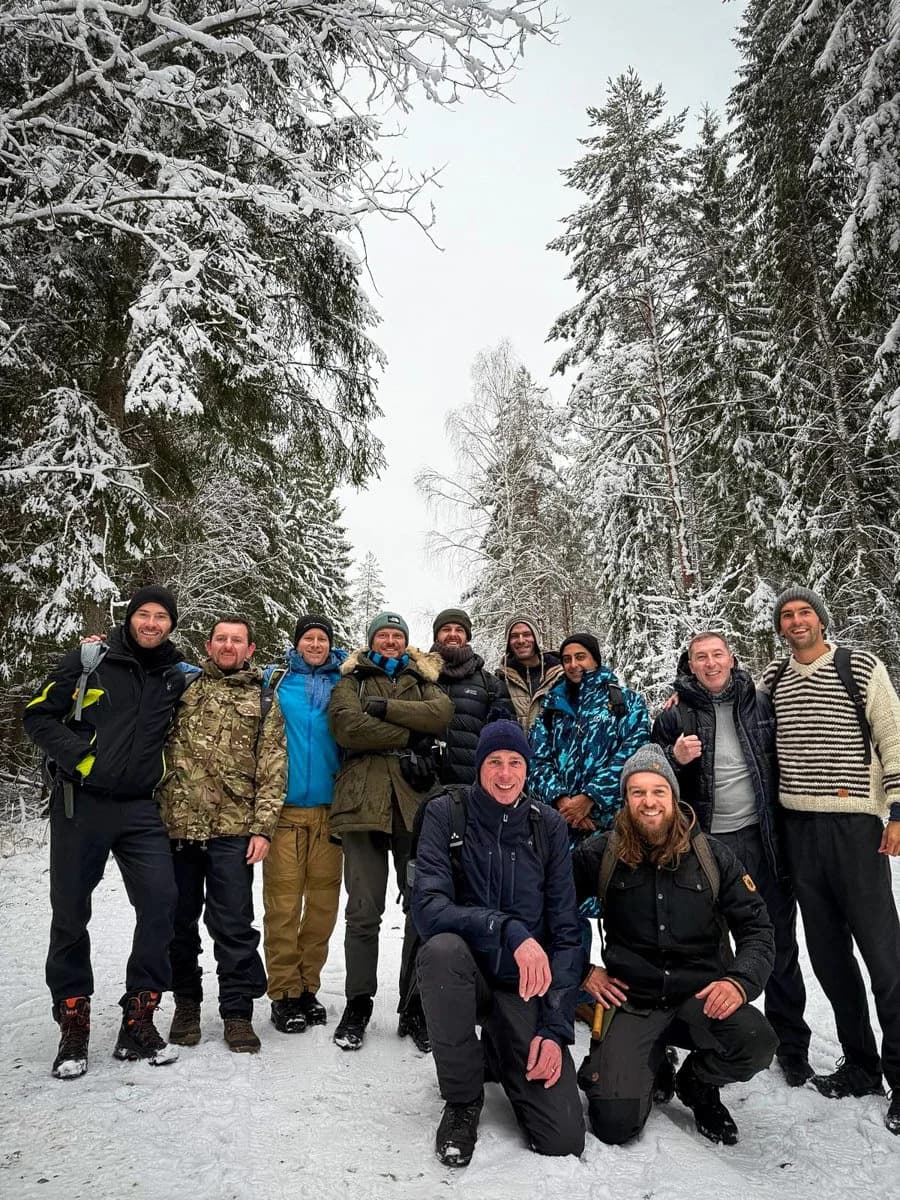
Group photo from the men’s retreat I helped facilitate last year
Why Men Are Going on Retreats in 2026
There’s a reason men’s retreats are exploding right now, and it has nothing to do with trendiness or escapism. Modern life has pushed men into a weird paradox: you can be successful, respected, and responsible, yet quietly burnt out and disconnected at the same time.
On paper, everything looks fine. Career, business, family, finances. But internally, a lot of men feel fried. Minds racing. Breath shallow. Sleep disrupted. Patience thin. Always “on.”
Stress doesn’t show up as collapse anymore…it shows up as functional burnout. Men who keep handling everything, but never actually slow down long enough to feel alive, grounded, or clear.
2026 is amplifying this. The world is getting louder, faster, more uncertain, and more digital by the month. AI is reshaping work. Expectations are rising. Attention is fragmented. The nervous system never gets a break.
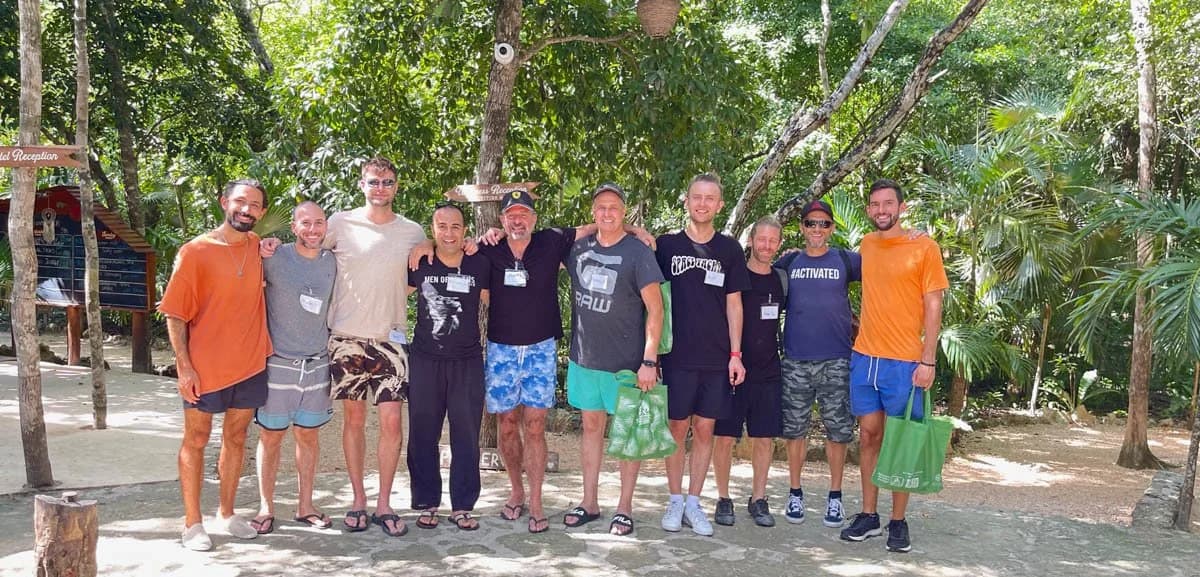
Men’s retreat in Tulum I attended as a participant
Add in relationship strain, lack of meaningful brotherhood, and zero space for honest reflection… and you get a generation of men who feel like they’re operating at full capacity with no room to reset. It’s honestly a recipe for disaster.
The brotherhood part is measurable, not just a feeling. The Survey Center on American Life found that the share of American men with at least six close friends fell from 55% in 1990 to 27% by 2021, cut in half in a generation. Men aren’t imagining that the support structure thinned out. It did.
That’s why men are seeking experiences that actually build capacity… not just mentally, but physically, emotionally, and somatically. They’re choosing environments where challenge, silence, and nature can do what constant stimulation and productivity never will.
Which leads to the real question many men have but never ask out loud…
What Actually Happens at a Men’s Retreat?
Men’s retreats are built very differently than most people imagine. They’re not camps for fixing men, and they’re not performative brotherhood weekends full of speeches and push-ups. The modern format I’m involved in is a blend of nervous system work, solitude, wild nature, and honest reflection… designed to help a man slow down, see himself clearly, and rebuild capacity from the inside out.
Here’s what that actually looks like in practice:
Nervous System Work & Breathwork
As a retreat facilitator and entrepreneur who’s very much tapped into these communities, here’s an observation I’ve had:
Most high-performing men live in their heads. Their minds run hot. Their bodies carry the stress.
That was me, too, when I discovered this world of personal development after dealing with a chronic health issue back in 2020. You can learn about my journey here on how I healed from Long Covid.
At that time, I was super stressed and anxious (I had a travel business during the pandemic). I was in my mind all the time, completely disconnected from my body. Thanks to some life-changing retreats and great mentors I met along my journey, I figured out how to overcome this challenging chapter of my life. I learned that nervous system work, particularly breathwork, is one of the fastest ways to break that pattern.
On a men’s retreat, breathwork isn’t about transcendence. It’s about cutting through mental noise, releasing stored pressure, and recalibrating the nervous system so you can finally feel grounded again… instead of constantly managing tension, impatience, and overthinking.
This is often the first time men realize how disconnected they’ve been from their own physical signals, instincts, and emotions.
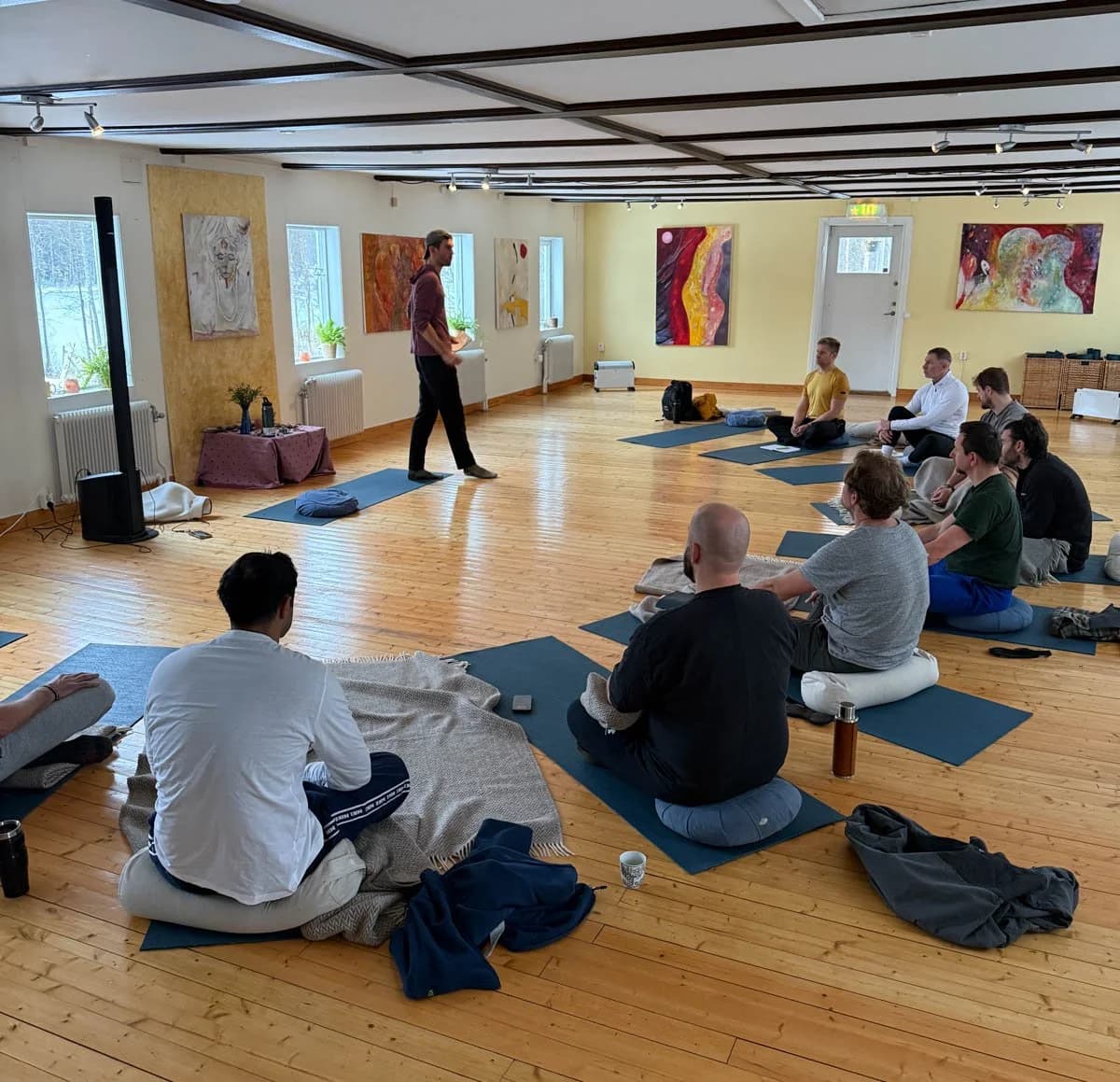
The breathwork space during our men’s retreat in Sweden
Cold Exposure & Stress Training
Cold immersion, lakes, rivers, ice baths, winter air, is becoming a core part of men’s retreats for one reason: it trains the system to stay calm under pressure.
The cold is also a great teacher. It drops you into the moment fast, and it shows me exactly where I tense up, brace, or try to force control.
When you can slow your breath, soften your body, and stay present in the cold, you’re learning how to regulate yourself in the boardroom, at home with your family, or in the middle of major life decisions.
It’s not macho…it’s capacity-building. It’s practicing steadiness on purpose, so you have it when life gets loud.
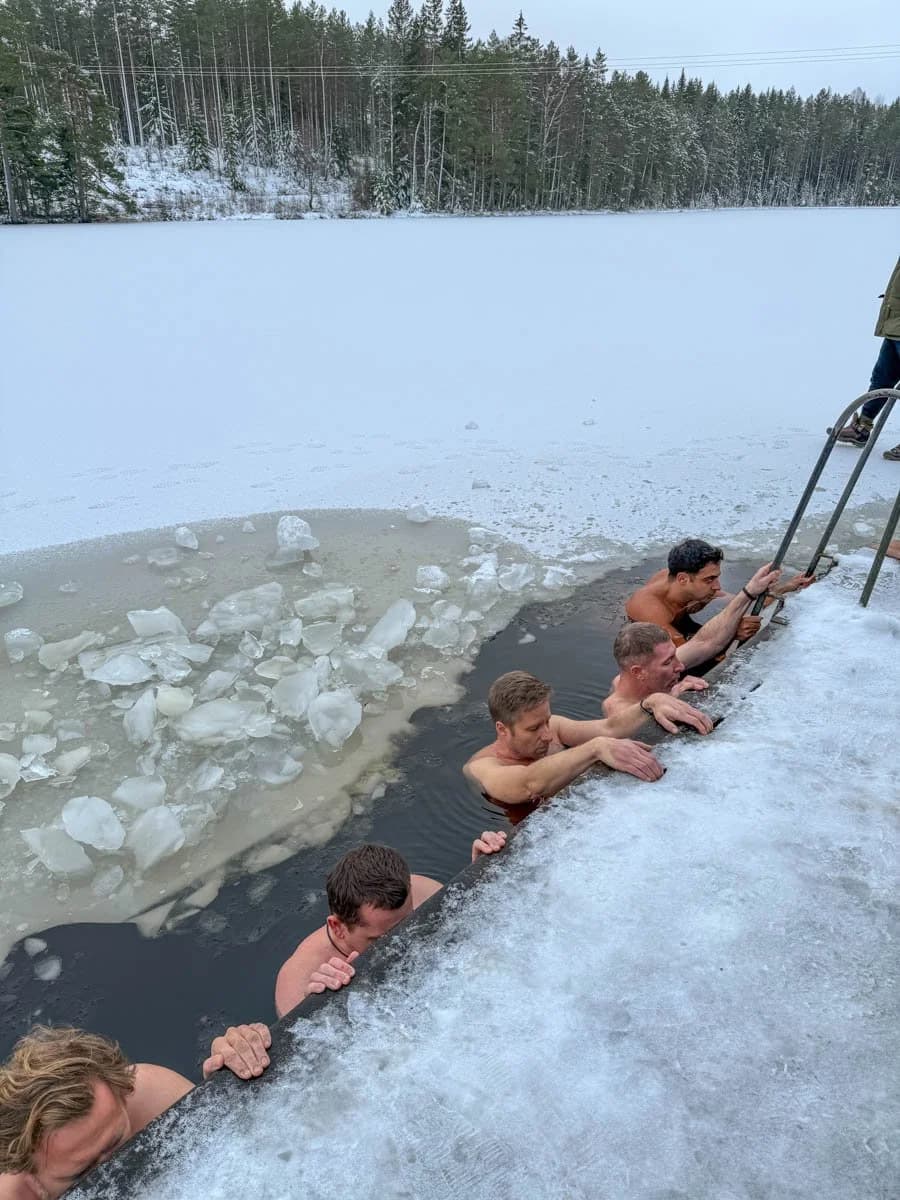
The group of men at our Sweden retreat doing a cold immersion in the lake
Brotherhood & Honest Reflection
Most men don’t have spaces for honesty with other men. They have colleagues, competitors, acquaintances, or drinking buddies… but rarely peers who reflect truth without judgment or performance.
At a men’s retreat, conversation tends to get real quickly. Not dramatic. Not therapeutic. Just honest. Men talk about direction, purpose, relationships, stress, ambition, and the gap between the life they’re living and the life they actually want.
I’ve done plenty of co-ed retreats too, and they absolutely have their place. But in my experience, if you want to go deep and get brutally honest, being in a room with only men changes everything. The guard drops faster. The stories get real. And the kind of accountability that actually sticks becomes possible.
Brotherhood isn’t created through “sharing.” It’s created through presence, challenge, and doing hard things together.
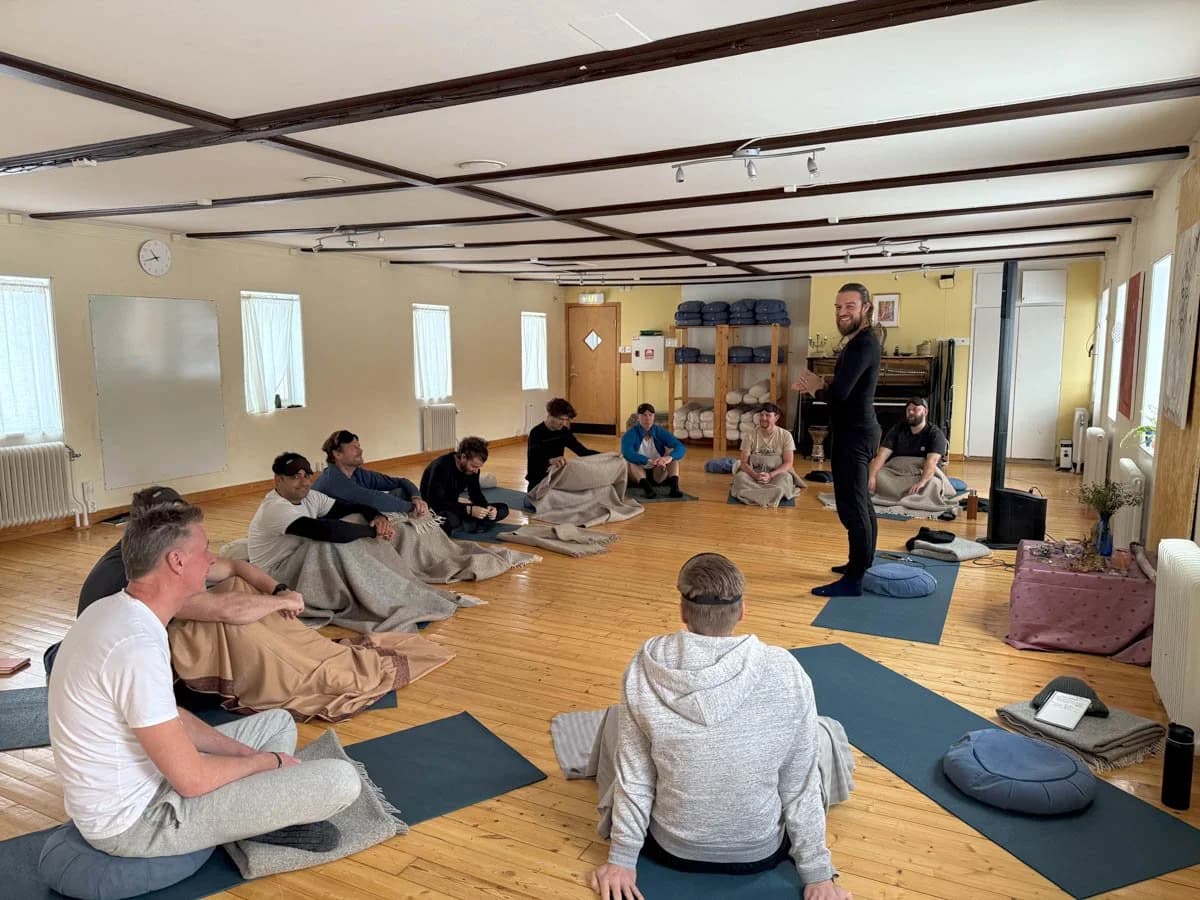
Share circle session led by Joren de Bruin (the founder of Into the Wild Within)
Silence & Time to Be Alone
This one surprises people. Men’s retreats are not nonstop activity. The silence is often what makes everything else land.
Silence removes distractions, dissolves performance, and gives men space to hear their own internal signal… the one that’s been drowned out by responsibility, work, and stimulation for years.
Clarity rarely shows up in conversation. It shows up in quiet. At our retreat in Sweden, we encourage minimal phone usage, and give plenty of breaks for journaling and reflection.
Curious if our retreat in Sweden is your next step? Feel free to send me an email to ask about the retreat.
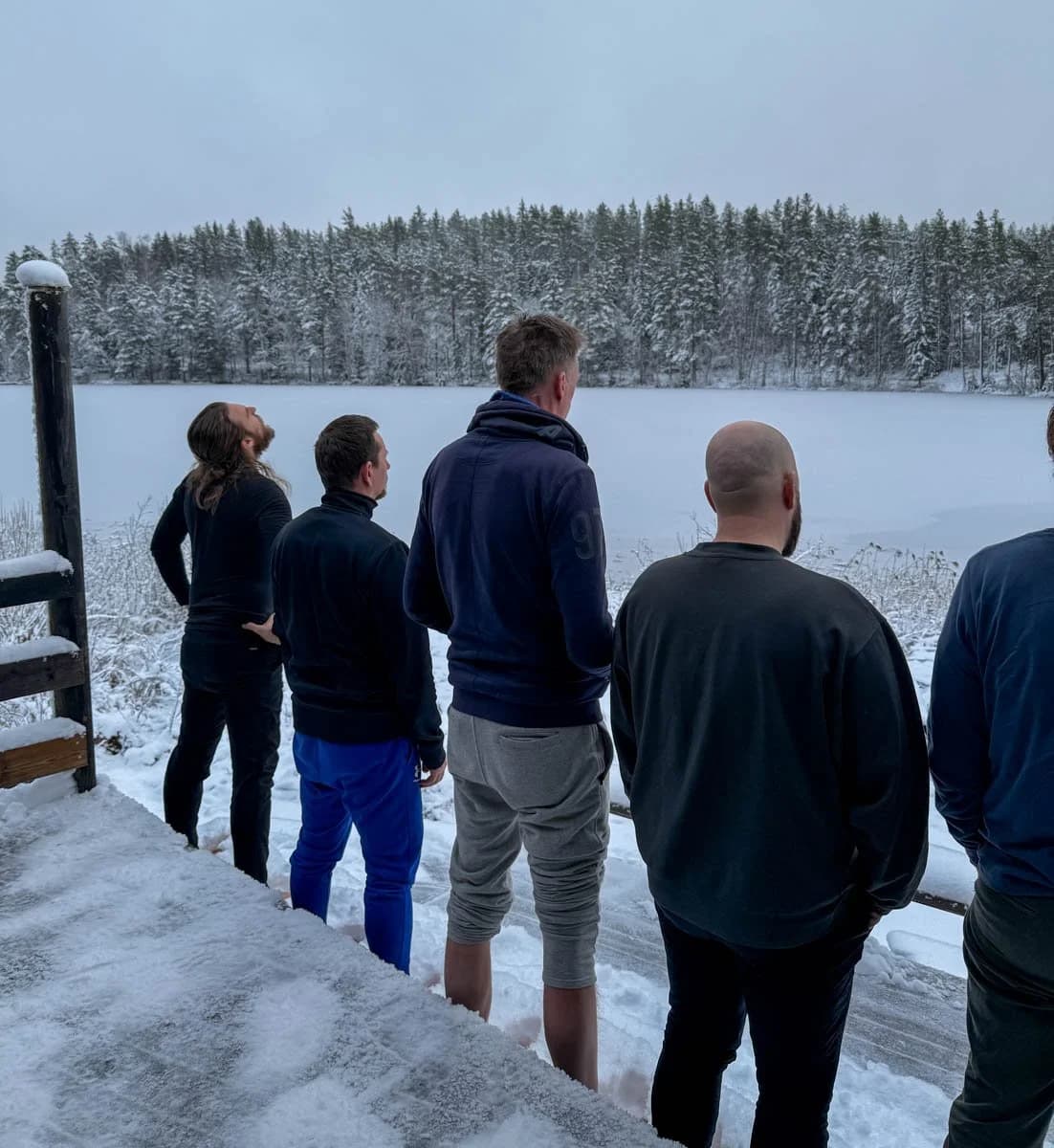
Quietly meditating outdoors. This is where the magic happens!
Nature, Embodiment & The Wild
Men are built for contact with land, weather, fire, cold, and risk. Modern life has stripped that out almost completely.
Retreats that incorporate wilderness, especially winter, forest, mountains, or open water, create conditions for a man to feel alive again. Not as a novelty, but as a reset into something primal and honest.
That’s one thing I love about Into the Wild Within, the retreat I help my friend Joren facilitate. We really make it a priority to be outside. I love that nature gives you instant feedback. You can’t hide from the cold, the wind, the silence, or your own mind.
Out there, your nervous system recalibrates. Your attention gets sharper. You stop performing and start listening. There’s a reason so many breakthroughs happen outdoors instead of in conference rooms. The wild strips away the noise and leaves you with the truth.
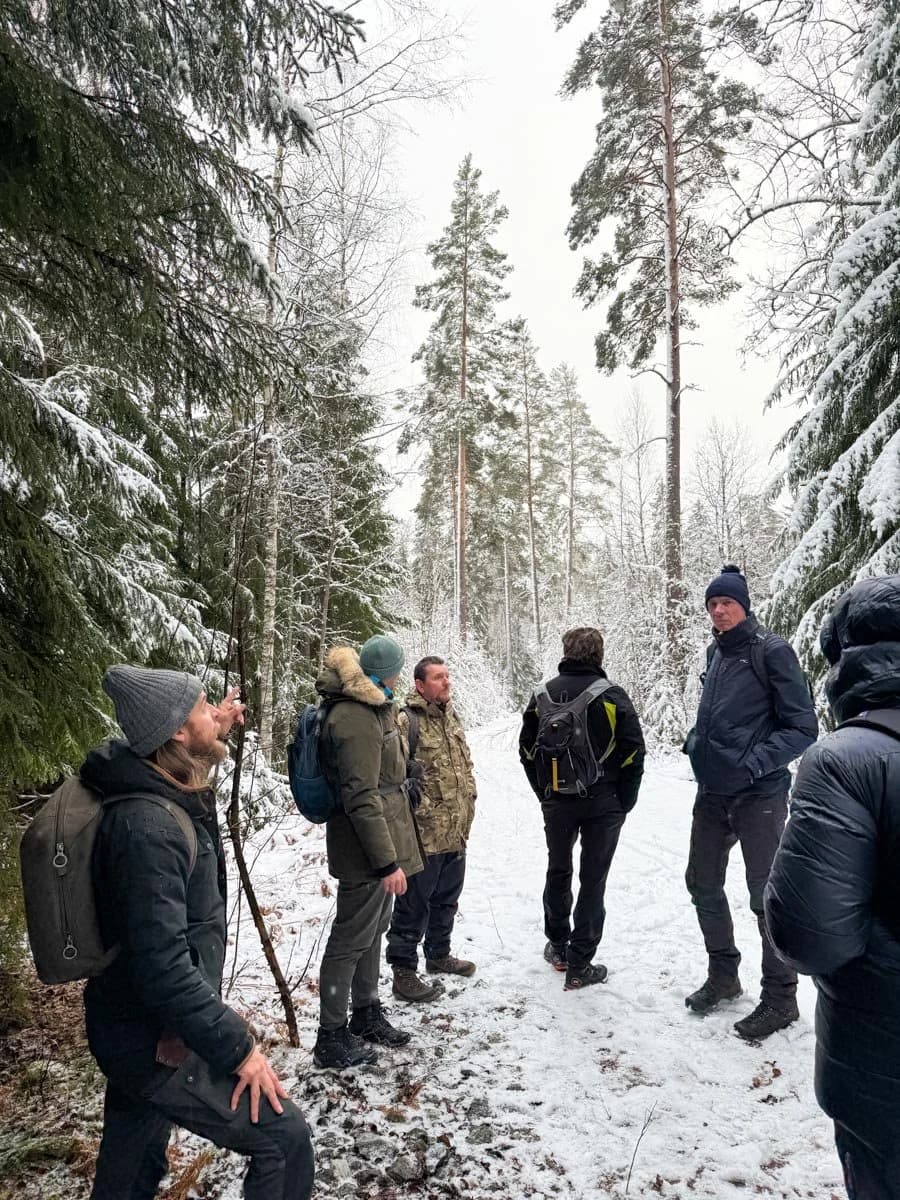
My photo of the men's group on a nature walk in the forest of Sweden
Survival Skills & Self-Reliance
I didn’t grow up learning any of this. I wasn’t the kid who could start a fire or feel confident in the woods.
But after going to men’s retreats as a participant, and now helping facilitate them, I’ve seen how much this stuff matters. I also found that I genuinely enjoy it. There’s something steadying about being outside, being useful, and knowing you can handle what’s in front of you.
Not every retreat includes survival work, but the ones that do tend to leave a mark. Making fire, sourcing food, chopping wood, navigating terrain… these are activities that re-anchor a man into competence, presence, and responsibility.
When I’m doing something real with my hands, my mind quiets down. I stop overthinking. I pay attention. I feel myself come back online.
It’s not cosplay masculinity. It’s remembering, in a very practical way, that you’re capable. And once you feel that in the wild, it’s a lot easier to carry it home.
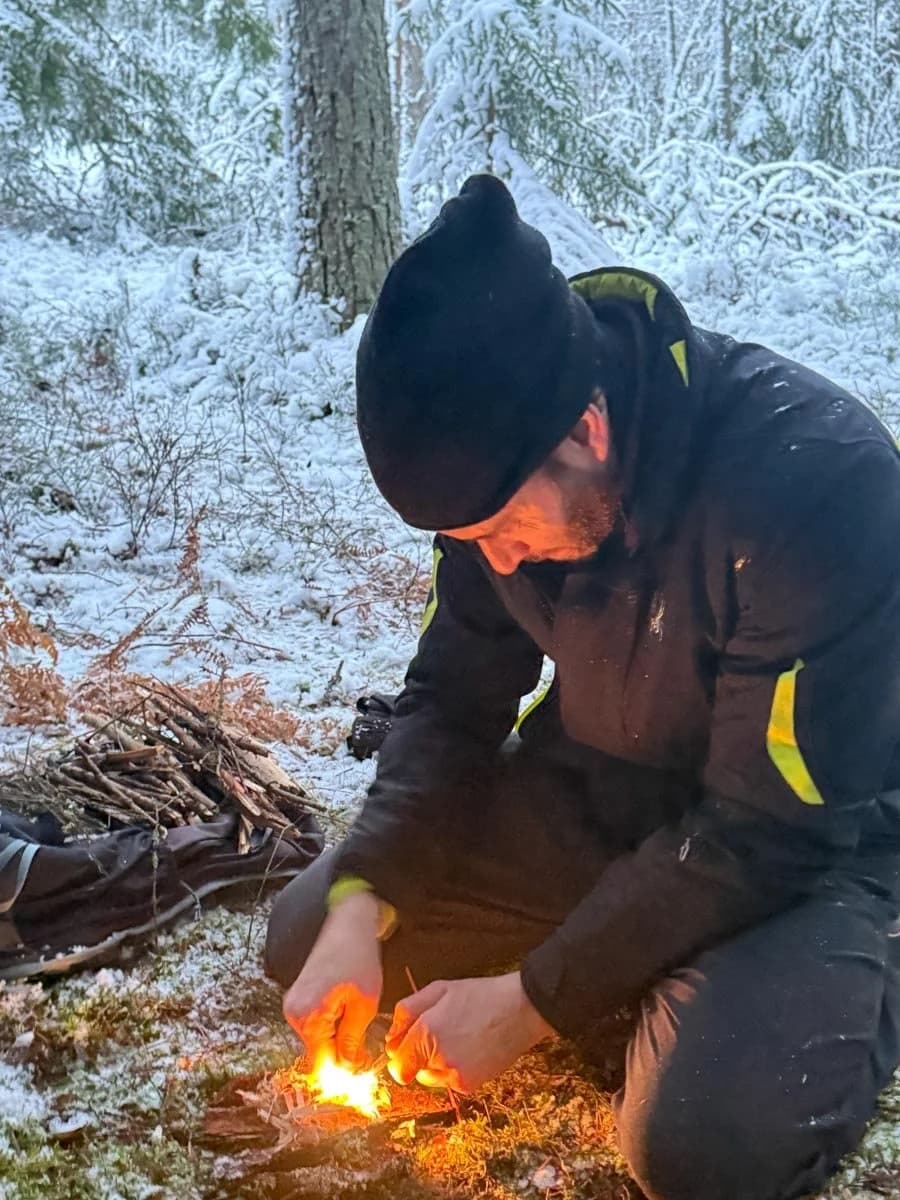
My photo of my friend Martin making a fire at our retreat
Visioning & Integration
The last piece is the part most men skip in their normal lives: integration.
And honestly, this is where I think a lot of retreats fall short. They create a powerful experience, but they don’t build a bridge back to real life. So you go home inspired, then Monday hits, and the old patterns slide right back in.
Clarity without action fades fast. Integration is where direction, commitment, and momentum get locked in, whether that’s in relationships, health, business, leadership, or purpose.
That’s why I’m such a big advocate for coaching alongside retreat work. Coaching keeps you accountable when the glow wears off. It turns insights into habits, and habits into change.
The good retreats understand this. Our retreat in Sweden makes it a priority too. We don’t just ask “what did you feel out there?” We ask: what are you doing next, what’s getting cut, who’s holding you to it, and what does the first week back actually look like?
Men don’t leave with hype. They leave with priorities. And a plan they can actually follow.
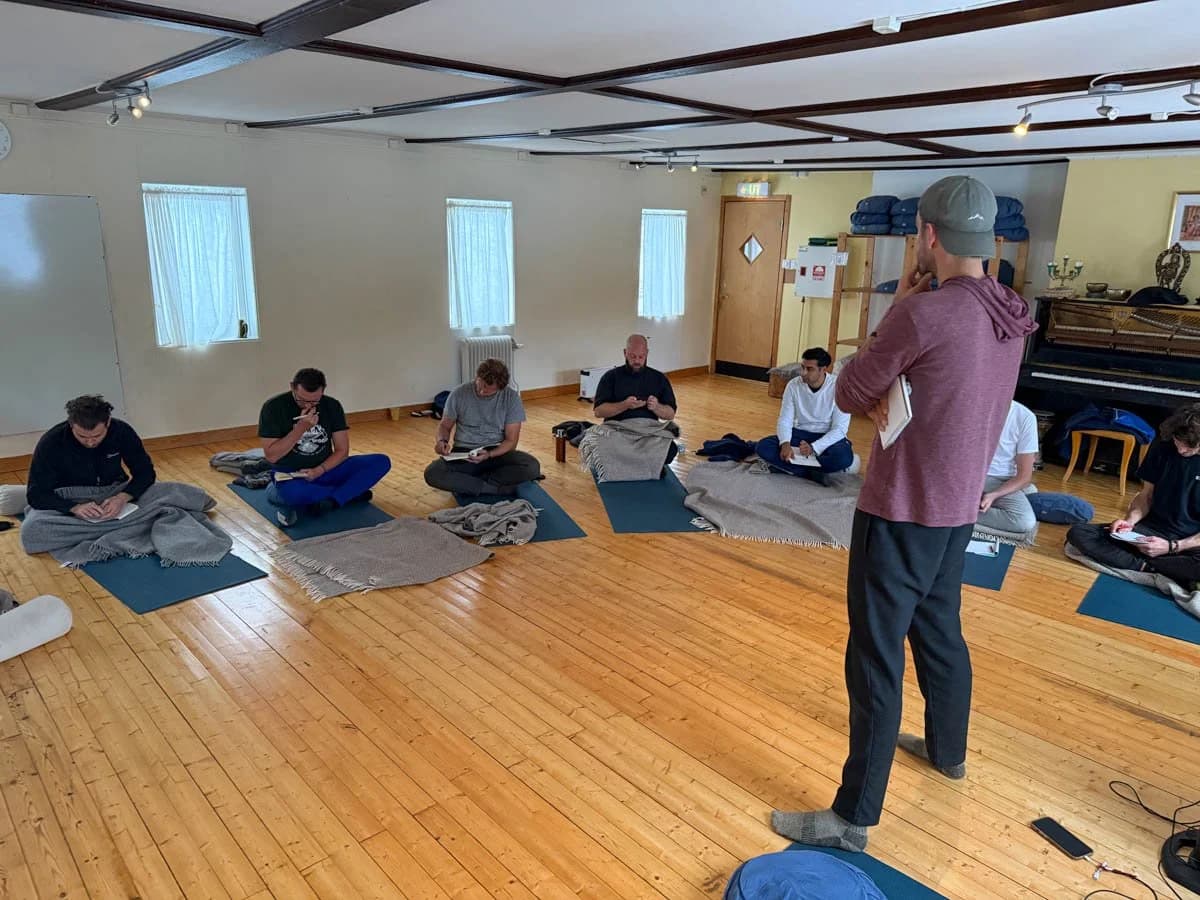
Me leading an integration session with some helpful takeaways for participants to bring home with them
Who Shows Up to a Men’s Retreat (It’s Not Who You Think)
The stereotype is that men’s retreats are for guys who are lost, broken, or trying to “find themselves.” In reality, it’s the opposite. Most of the men who show up are high-functioning, disciplined, and successful on paper. The exact men who have spent years pushing, providing, and performing without ever slowing down long enough to ask what comes next.
I’ve seen founders, entrepreneurs, business owners, executives, athletes, creatives, and fathers. Men who have built careers, handled responsibilities, and quietly carried more than they’ve ever voiced out loud.
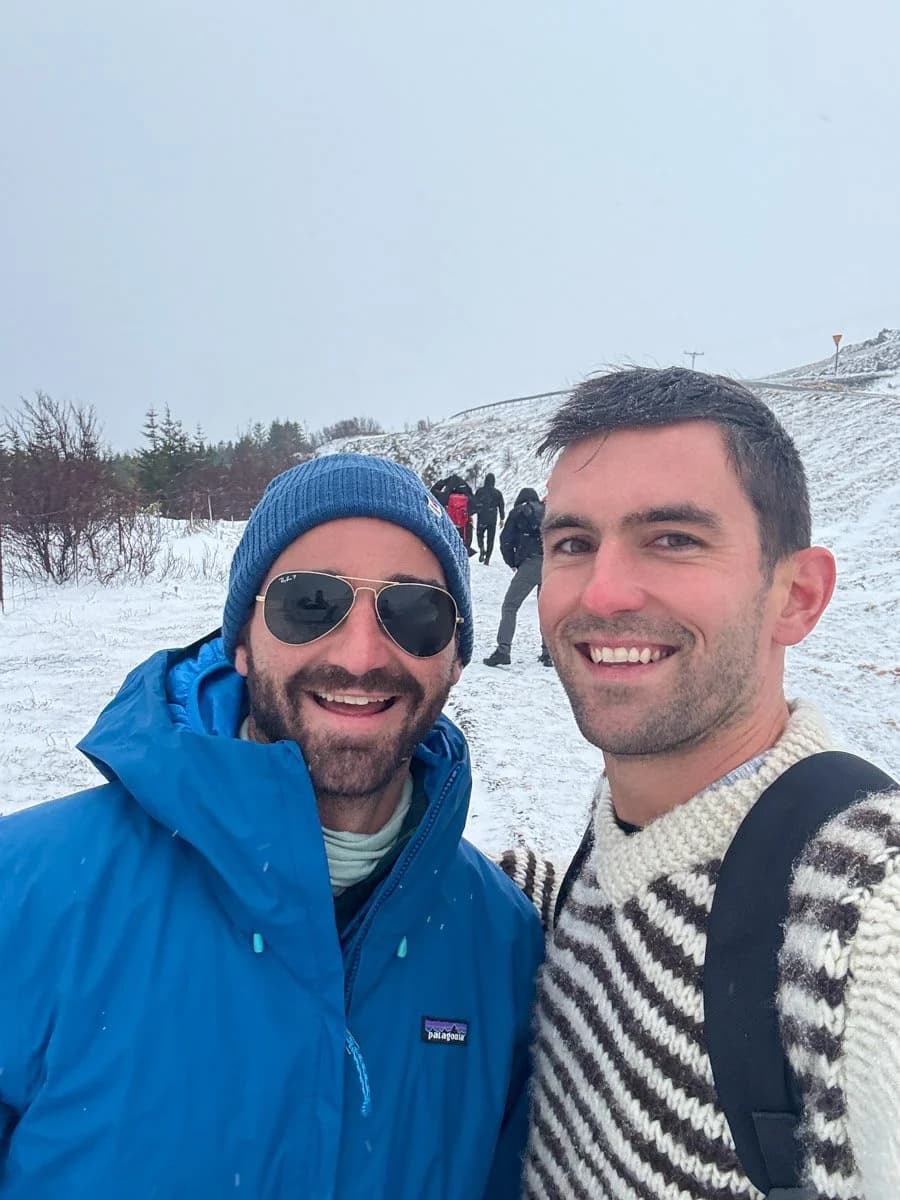
Me and fellow entrepreneur Joshua Church, who built a $30 million business. He and I facilitated a business mastermind last year.
They’re not looking for validation. They’re looking for clarity. They’re looking for capacity. And they’re looking for other men who operate at their level. Men who don’t tap out at discomfort, who don’t crumble under stress, and who don’t flinch at honest reflection.
Most of them aren’t broken or drifting. They’re just running out of internal runway. Their minds sprint but their bodies feel numb. Their responsibilities grow while their space to recalibrate shrinks. They function well, but rarely feel fully alive or fully present.
There’s also a quieter pattern: men come because they don’t have male peers who challenge them, call them forward, or reflect truth without ego. Brotherhood used to be built into life. Now it has to be chosen.
That’s what makes these retreats so powerful. They attract men who are already operating at a high level… and give them a container where honesty, competence, and growth are the default, not the exception.
What Men Actually Get Out of It
Most men don’t go on retreat for inspiration. They go because something inside them knows they’re capable of more. More clarity, more presence, more aliveness, more self-respect, more impact.
That was true for me as a participant, and it’s even clearer now that I help facilitate. I’ve watched the same pattern play out with all kinds of men. Different lives, different problems, same hunger for something real.
The shift isn’t usually about fixing anything. It’s about removing the noise and reconnecting to the part of you that already knows what’s true.
Here’s what I’ve personally gotten out of it, and what I consistently see men walk away with.
Clarity & Direction
As a participant, the biggest surprise was how fast clarity shows up when the inputs stop. No scrolling, no constant decisions, no background stress.
As a facilitator, I see men arrive spinning. By day two or three, their nervous system starts to settle and the truth gets simple. They start saying things like, “I’ve known this for years,” and you can feel the weight drop.
Men don’t leave with a longer to-do list. They leave with fewer priorities and cleaner commitments. And that’s where momentum comes from.
Nervous System Capacity
Cold, breathwork, silence, hard hikes, long sits, it’s all training. Not to be tough, but to be steady.
In my own life, this is where the work has paid off the most. Stress still shows up, but it doesn’t hijack me as easily. I recover faster and I don’t spiral the same way.
Facilitating, I’ve watched men who swear they “can’t slow down” learn to regulate in real time. You see it in their shoulders dropping, their voice changing, and the way they stop rushing to explain themselves.lan.
This changes how you lead, how you parent, and how you show up in your relationships.
Presence & Emotional Range
Presence isn’t mystical. It’s staying here when your mind wants to sprint to the next task.
For me, these retreats brought back emotional range I didn’t realize I’d numbed out. Not in a dramatic way. More like I started feeling life again instead of managing it.
As a facilitator, I notice men often show up with two gears: fine, and stressed. Then they start accessing more. Grief, gratitude, tenderness, relief, joy. It’s like color comes back into the picture.
Brotherhood & Real Support
A lot of men carry heavy things alone. Not because they want to, but because they don’t have a place where they can be honest without being judged or “handled.”
I’ve felt the power of being witnessed, and I’ve watched it change other men too. Something relaxes when you realize you don’t have to perform.
The best part is the tone. It’s not hype. It’s not therapy-speak. It’s competent men telling the truth, calling each other forward, and not letting each other hide.
Self-Respect & Embodied Confidence
There’s a particular kind of confidence that shows up when you do hard things without posturing. Cold water, long silence, uncomfortable conversations, early mornings, real effort.
I’ve felt that shift in myself. It’s quieter than ego confidence. It’s steadier. It makes you trust yourself.
Facilitating, I can almost see the moment it lands for a man. He stops talking like he needs approval. He looks people in the eye. He stands differently. He’s not puffed up. He’s just rooted.
A Reset Relationship With Work & Ambition
High-performing men don’t need less ambition. They need better orientation.
I’ve watched men come in thinking the answer is “work harder” or “optimize more.” Then they realize the problem isn’t effort, it’s alignment.
In my own case, retreats didn’t make me quit anything. They helped me restructure my ambition so it stopped eating the rest of my life.
Momentum & Integration
This is the part I care about most as a facilitator. A lot of retreats create a peak experience, then send you home with a nice memory and no plan.
The good ones build a bridge back. We push for commitments that are specific, realistic, and tracked. Who are you talking to when you get home. What changes in week one. What gets removed. What gets protected.
Men don’t leave with hype. They leave with priorities. And they leave knowing what has to happen next.
My Experience as a Participant and Facilitator
I didn’t find men’s retreats because they were cool or trendy. I found them because I hit a point where performance stopped working.
In my late 20s, I was in a real crisis. I was dealing with Long Covid, and at the same time my travel business was taking hits in the height of the pandemic. I could still “function,” but I wasn’t okay. My body was drained, my mind was racing, and I couldn’t hear myself through the stress.
That season felt like a turning point, like I was finally crossing from being a boy into being a man. And I realized I had a lot to unlearn. Bad habits, avoidance, people-pleasing, overworking, the need to prove myself. I didn’t just need motivation. I needed to learn what grounded manhood actually looks like in the modern world.
That’s when I did two men’s retreats as a participant, and I also committed to a year-long men’s work program with weekly coaching calls. The coaching mattered. It kept me honest, it kept me accountable, and it gave me structure when I didn’t trust my own consistency.
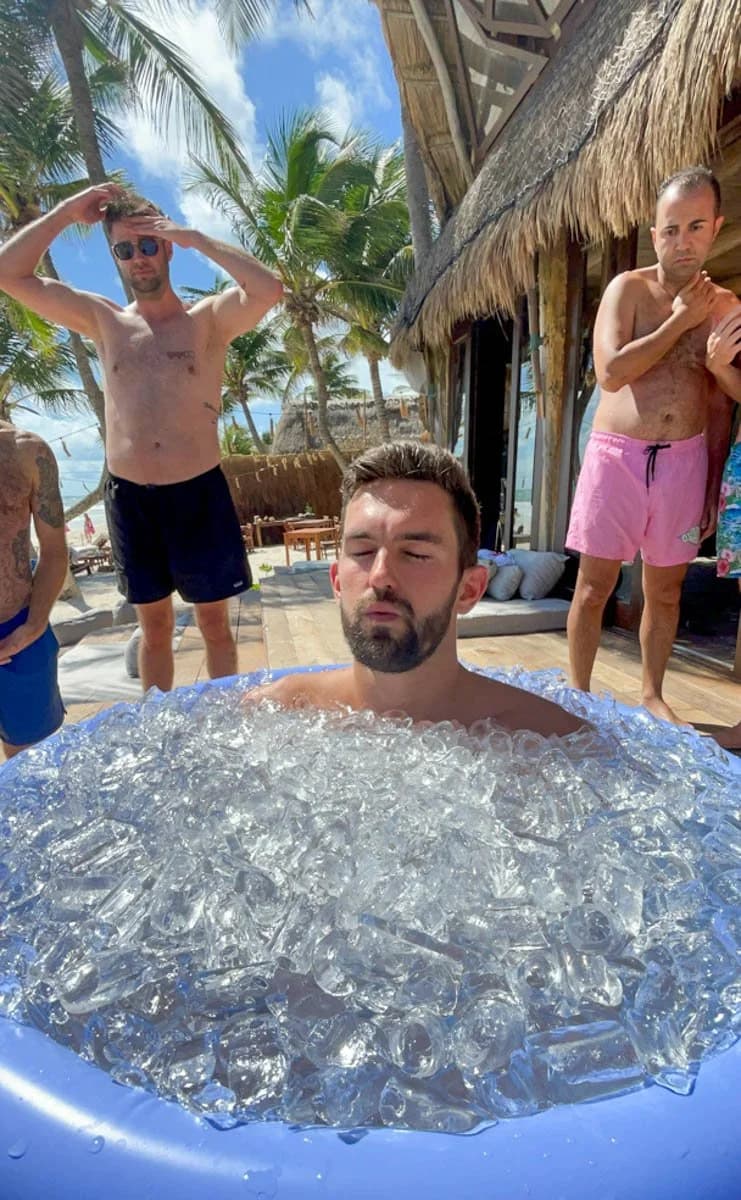
Me in an ice bath at the Men of Means Retreat in Tulum
But the retreats did something different. Retreats were the accelerant. When you leave your familiar environment, the old patterns lose their grip. There’s no hiding in your routines, your screens, your busyness, or your usual coping mechanisms. You get quiet enough to hear what’s true, and you’re challenged enough to actually change.
That combination gave me what everyday life couldn’t: silence, breath, brotherhood, nature, discomfort, and presence. My clarity sharpened. My priorities got simpler. Stress didn’t vanish, but my ability to hold it grew.
Now that I help facilitate retreats, it’s even clearer to me what the world needs, and what actually works. I’ve watched men arrive successful on paper but disconnected inside. Tight. Analytical. Exhausted. Performing competence.
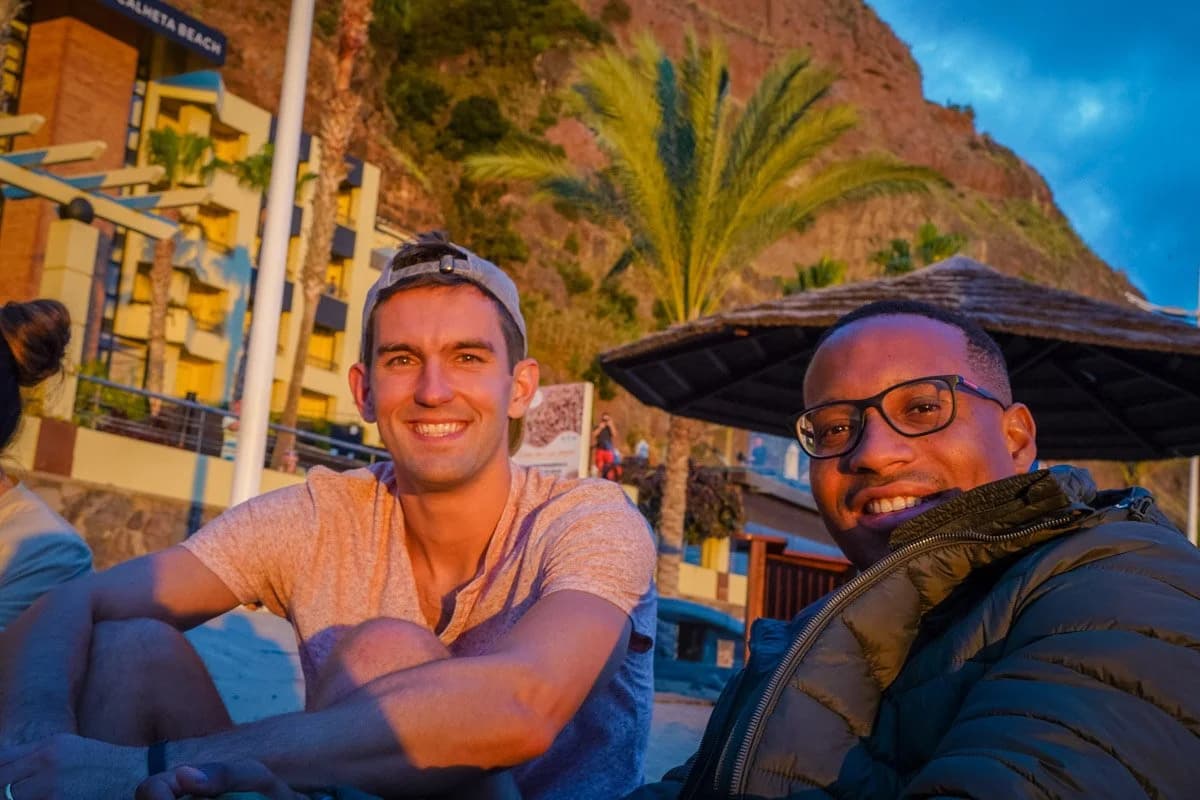
My photo of me and my friend Desmond at a retreat in Madeira
And I’ve watched what happens when the conditions are right. They start telling the truth. They practice self-leadership. They learn to own their words and their actions. They stop outsourcing their power. They start living more authentically, with real direction and clean integrity.
This isn’t taught in schools. Most men never get shown how to regulate themselves, communicate cleanly, lead themselves through discomfort, or build a life that actually feels aligned.
That’s why I’m passionate about this work. Not as “self-help,” but as training in honest self-leadership. The kind that creates real relationships, real health, real purpose, and real freedom.
And if the world keeps getting noisier, retreats will matter even more. They’re one of the few places where a man can step out of the noise long enough to remember who he is, and start building a life that matches it.
Read also: My Favorite Transformational Retreat Spots This Year
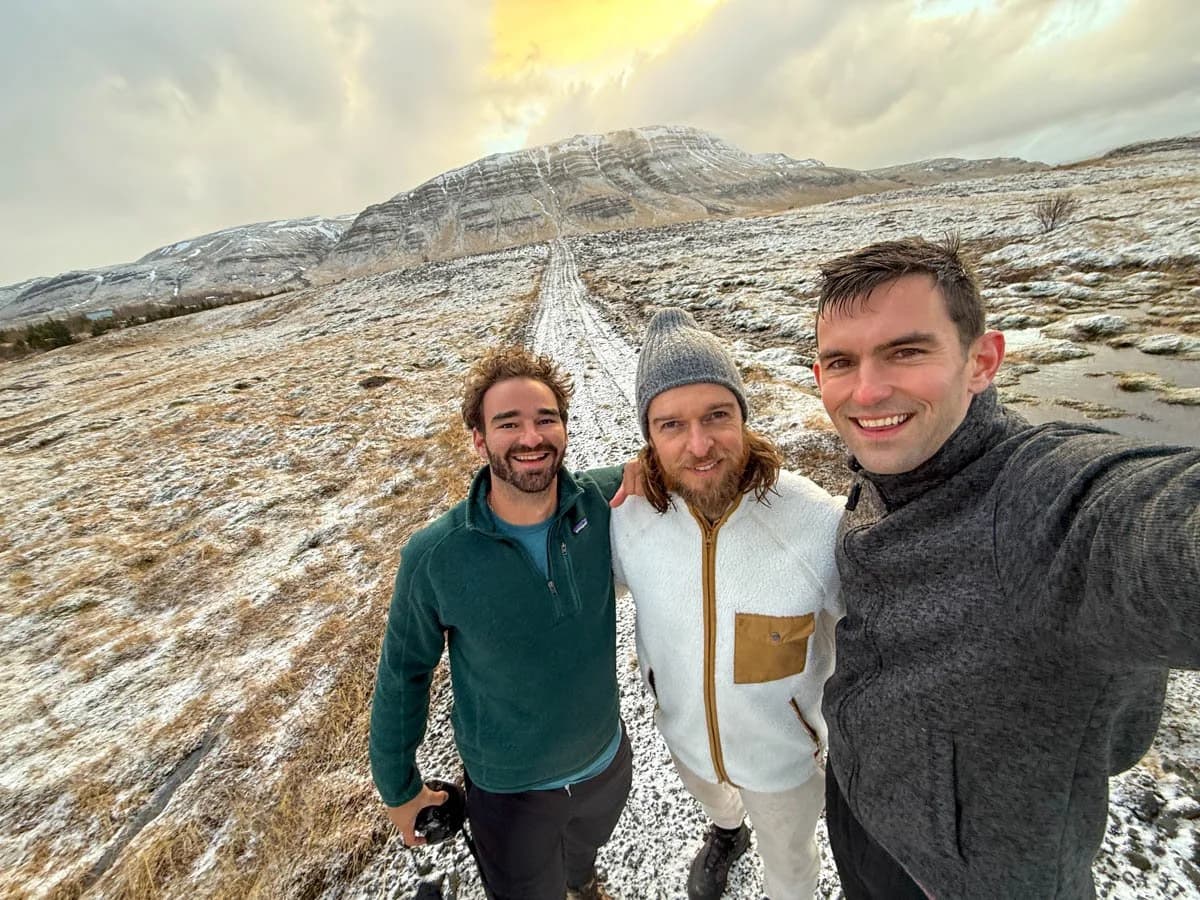
My photo of me with Joren de Bruin and Joshua Church. We all facilitated an Iceland retreat together last year
The Sweden Wilderness Model (A Real Example)
A lot of men’s retreats take place in comfortable settings, resorts, conference centers, or rented houses in nature. There’s nothing wrong with that. But there’s a different kind of experience when you go into the wild, especially in winter, especially in the north.
From February 18-25, 2027, I’m co-facilitating a 6-day men’s retreat deep in the forests of Sweden. It’s small on purpose…10 men max. Everything about the environment is designed to strip away noise and bring you back into contact with what’s real.
There’s cold immersion in the lake. Wood-fired sauna. Silence. Fire. Breathwork. Wild food. Some survival skills. Clear reflection. And time alone in nature without distractions. Nothing is for show. Nothing is theatrical. Everything serves the same purpose: to create the conditions where a man can hear himself again.
Winter plays an important role here. When the air is cold and the forest is quiet, your mind slows down. Things get simple. Your nervous system shifts out of performance and into presence. You feel your body. You feel your breath. You feel the land under your feet.
The retreat combines that environment with modern tools, breathwork, nervous system regulation, integration work, and ancient ones: fire, silence, cold, and brotherhood. It’s all about recalibration.
We’re not there to motivate anyone or fix anything. We’re there to help men create space, build capacity, and reconnect with the part of themselves that knows exactly who they are and what matters.
If most of modern life pulls men away from themselves, Sweden pulls them back in.
Watch my video I just shared on Instagram for our upcoming Sweden retreat!
Watch the Sweden retreat reel on Instagram, shared by Jon Miksis (@global.viewpoint).
How to Know If a Men’s Retreat Is Right for You
A men’s retreat isn’t for every man. It’s not for the guy who wants a quick dopamine hit or a motivational lecture. It’s for the man who knows something needs to shift…internally, in how he leads his life, or in how he relates to himself and the people around him.
Here are some signs that this kind of work might be right for you:
You feel stretched, fast, or “always on”
Your mind runs ahead of your body. You’re productive, effective, and responsible, but you rarely feel grounded.
Life looks good on paper, but something feels off
Success didn’t fix the internal restlessness. You’ve achieved, but there’s more to unlock.
You crave clarity on your next chapter
Not in a dramatic way. Just in a grounded, directional, “what actually matters now?” way.
You’ve built external success but want internal alignment
Career, finances, family, status…all in motion. Now you want meaning, orientation, and depth.
You don’t have male peers who challenge you honestly
You have colleagues and friends, but you don’t have a circle that reflects truth without ego.
Stress or tension is affecting how you show up
Maybe it’s in your sleep, your patience, your breath, your relationships, or your energy.
You’re functioning, but you’re not fully alive
You check the boxes. You handle the load. But you know you’re operating below your potential.

Traveling makes me feel alive, but retreats take that a step further
You want to lead your life, not just manage it
The desire isn’t for escape. It’s for clarity, direction, and grounded self-leadership.
If you read this list and felt one or more of those land, you’re not alone. It’s a pattern I see over and over again, especially in high-performing men between their late 20s and mid-50s who have spent the last decade building something meaningful, only to realize they need a stronger internal foundation for what comes next.
Not every man reaches this point at the same time, but every man who does knows it. There’s a quiet pull. A curiosity. A sense that the next chapter requires a different version of you.
How to Choose the Right Men’s Retreat (Without Getting Stuck in the Noise)
Once a man decides he’s ready for this kind of work, the next question is simple:
Which retreat should I actually go to?
And this is where a lot of men get stuck. There’s more out there than ever, from spiritual immersions and medicine work to breathwork weekends, brotherhood camps, silent retreats, biohacking labs, military-style challenges, and everything in between. The options vary wildly in both intention and impact.
Here’s how to choose wisely.
Look for Container Size
Big groups are great for conferences and networking. Retreats require depth.
A container of 8–12 men creates:
trust
honesty
presence
real reflection
actual integration
Anything over 25 becomes more about the facilitator than the men.

Always aim for men retreats with less than 15 people if you want true transformation
Look for Nervous System Work (Not Just Talking)
Talking about stress isn’t the same as regulating stress.
The strongest retreats include:
breathwork
cold exposure
embodiment
somatic tools
time in nature
silence
Conversation lands better when the body is online.
Look for Wilderness or Nature Contact
Hotels are comfortable. Comfort rarely changes men.
Nature strips away distraction and performance faster than any curriculum. Forests, mountains, water, cold, and fire have been teaching men long before modern psychology existed.
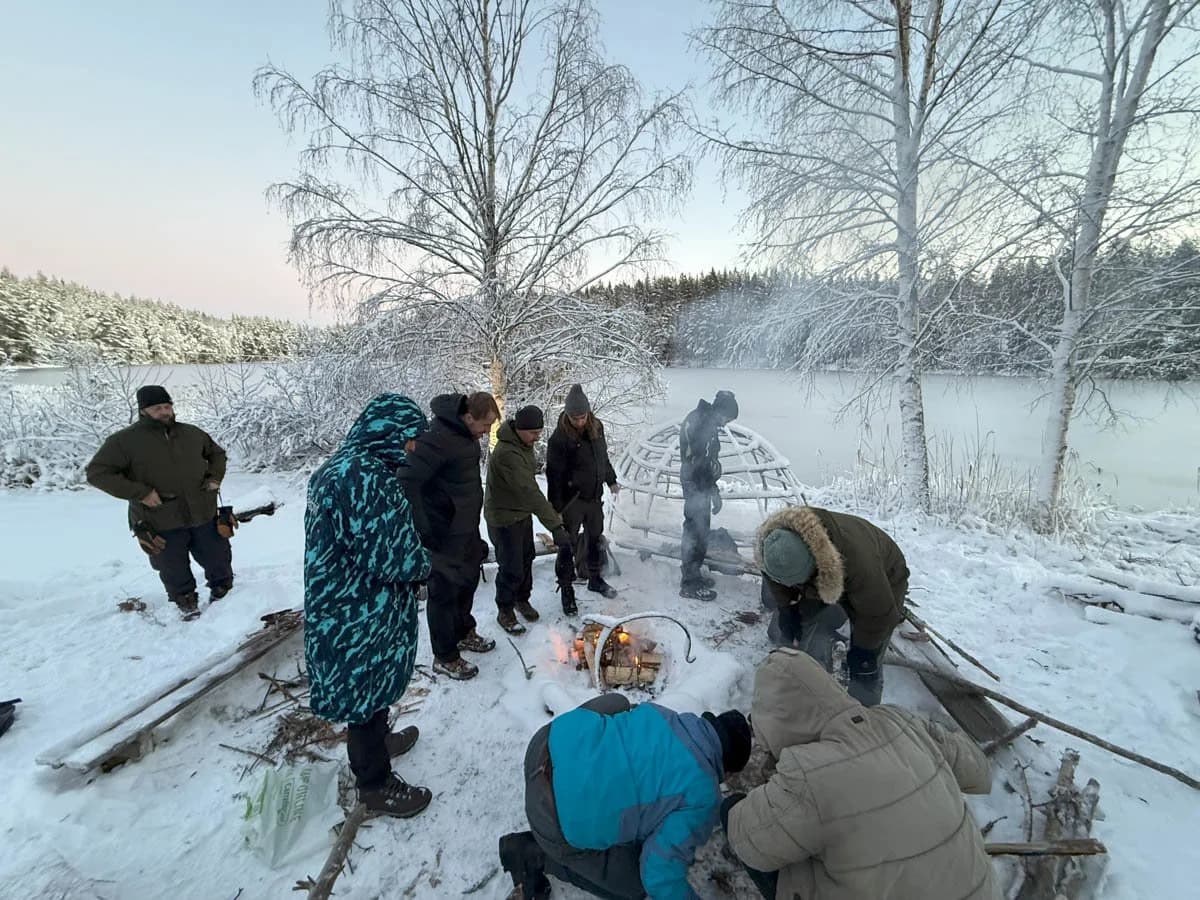
Nature and earth skills are a key pillar at our men retreat in Sweden
Look for Brotherhood Over Performance
If a retreat is all about hype, toughness, or showcasing how “alpha” everyone is, skip it.
Real brotherhood is built through:
honesty
listening
shared struggle
support
challenge
Not competition or posturing.
Look for Integration (Not Just a Peak Experience)
Peak experiences are easy to create. Integration is where life changes.
Ask:
Does the retreat help you bring this home?
Are there frameworks or practices?
Is direction clarified?
Are commitments made?
If everything ends at the high moment, it fades within weeks.
Look at the Facilitators’ Lived Experience
Credentials are fine. Lived experience matters more.
Important questions:
Do they embody what they teach?
Have they done this work themselves?
Do they have depth or just tactics?
Have they earned wisdom or read about it?
Men don’t follow hype. They follow embodiment.
Look at the Intent of the Retreat
The strongest retreats are designed for:
clarity
leadership
nervous system capacity
brotherhood
direction
self-respect
relational strength
If the intent is to “fix you,” “heal you,” or “give you answers,” it’s probably outsourced agency.
The right retreat helps you remember you already have it.
Choosing the right retreat isn’t about trend or aesthetics. It’s about finding the environment that challenges you, supports you, and gives you the space to recalibrate who you are and how you lead your life.
When you find that kind of container, saying yes becomes obvious.
Want to learn more about our men’s retreat coming up? Email me for the dates and logistics.
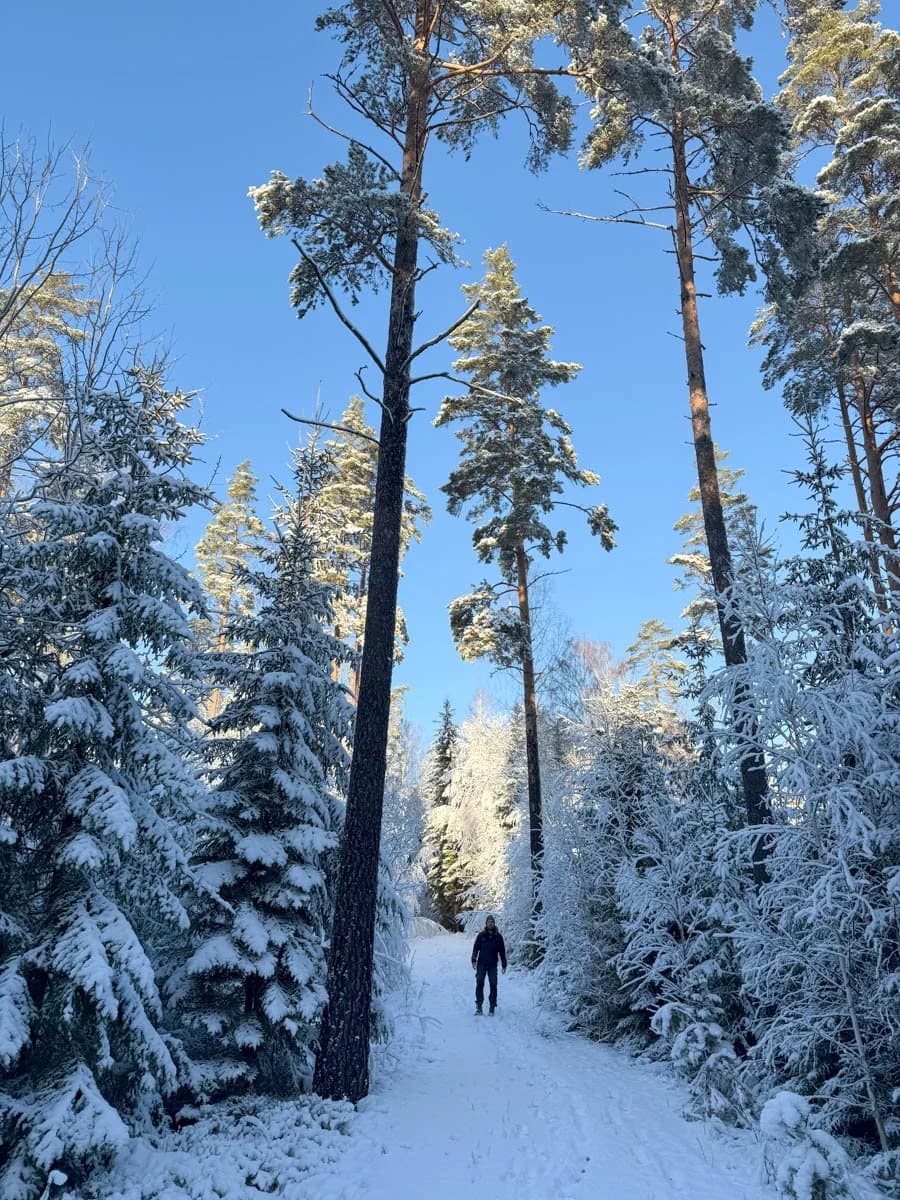
Wild forest in Skinnskatteberg, Sweden where we host our retreat
Common Questions Men Have (But Rarely Ask Out Loud)
Most men don’t talk about retreats publicly. They research quietly, ask anonymous questions online, or sit on the idea for months before making a move. It’s not because they’re unsure, it’s because they’re trying to understand the reality of the experience without stepping into a stereotype or looking like they’re struggling.
I have answered the ones I hear most often, spoken or unspoken, in the FAQ at the end of this guide.
Once these questions are answered, a quieter one emerges:
“If not now, when?”
That’s usually the moment a man realizes the retreat isn’t the leap, it’s the recalibration.
Want the full picture? See the full retreat details.
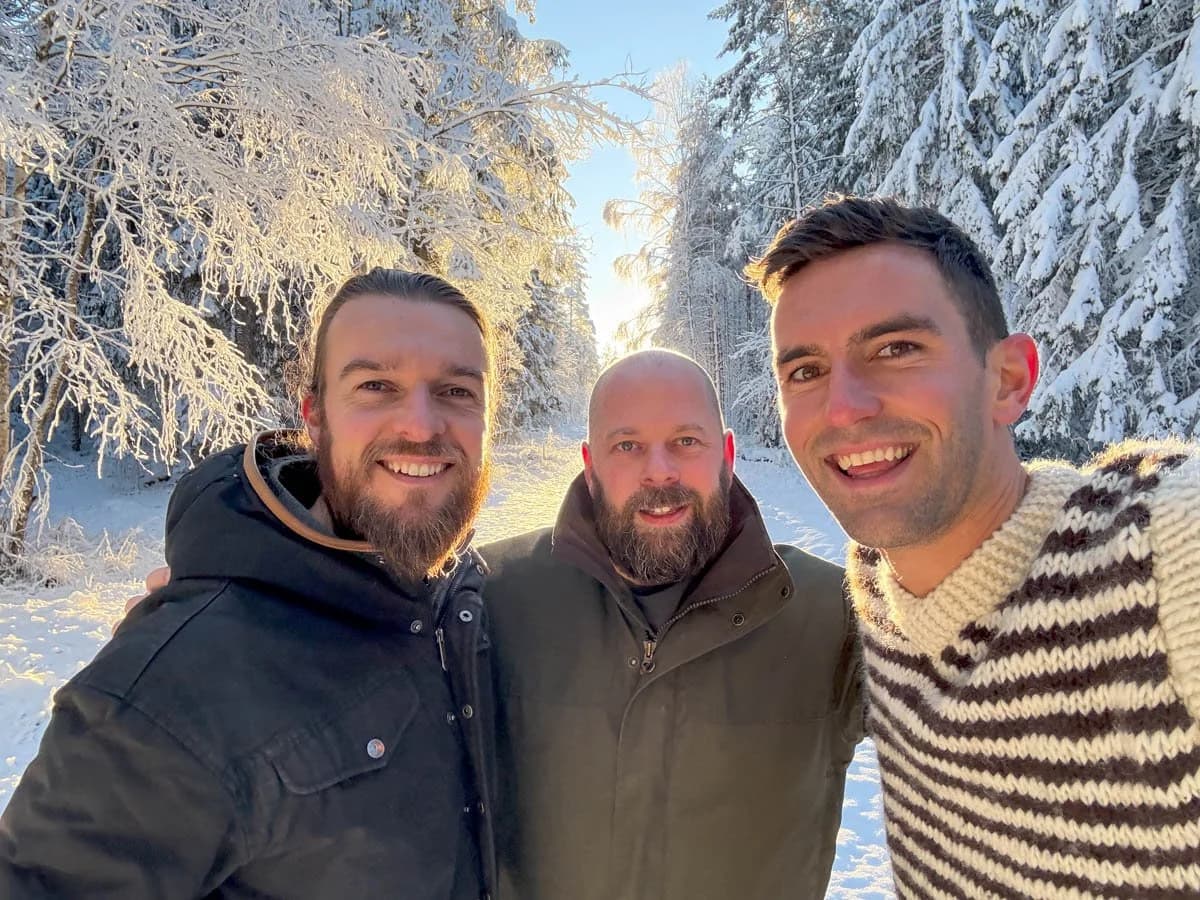
The dream team: Joren de Bruin, Pascal Labrie, and Jon Miksis - hosting our retreat last year
Final Thoughts: Why This Work Matters in 2026
We’re stepping into a decade defined by speed, uncertainty, and massive shifts. Technology is accelerating faster than human nervous systems can adapt. Work is changing. Identity is changing. Expectations are changing. The simulation is getting louder, not quieter.
Most men can feel it. Not as panic, but as pressure. As responsibility. As a sense that the way we’ve been operating won’t carry us through what’s coming next.
In times like that, clarity and capacity become strategic advantages. Not luxuries. Not hobbies. The men who thrive in a fast-changing world aren’t the ones who grind the hardest. They’re the ones who can stay grounded while everything around them moves.
That’s what retreats like this are ultimately about. Not motivation. Not inspiration. Not hype. It’s nervous system regulation, stress tolerance, direction, brotherhood, resourcefulness, presence, and self-leadership, the internal architecture that lets a man hold his life without collapsing into distraction or performance.
Modern life trains men to stay “on” at all times. But leadership…real leadership, is the ability to shift gears. To slow down. To feel. To discern. To choose. To build from alignment instead of reactivity.
If the last few years have been about achievement, performance, and external success, the next few will be about internal coherence…about aligning who you are with how you move through the world.
Men’s retreats aren’t an escape from responsibility. They’re preparation for it. They help men develop the internal foundation for the kind of life they actually want to build, and the kind of world they want to help shape.
In a decade defined by rapid change, that might be one of the most valuable investments a man can make in himself.
Curious what this looks like in real life. I’m helping lead a 6 day men’s retreat in Sweden built around everything I just described. You can check it out here. Or, send me an email with any questions with any questions you’ve got.
Cheers! Jon
Frequently asked questions
Do I have to talk about my feelings?
Not in the way most men imagine. There’s no forced vulnerability or group therapy. Honesty shows up naturally when the conditions are right, through challenge, breathwork, silence, and brotherhood. Men open when it makes sense, not on command.
Is it spiritual, religious, or woo?
Some retreats are. Many aren’t. The modern wave is grounded: nervous system work, nature, reflection, and embodied presence. No belief system required. Just willingness.
Is it going to be awkward?
Awkwardness only exists when performance is present. Once men realize they don’t have to perform, compare, or impress anyone, awkwardness disappears fast. Challenge and shared discomfort dissolve social hesitation quicker than talking ever could.
Will I be the weakest guy there?
One of the biggest quiet fears. The truth: competence shows up differently for every man. Strength might be physical, emotional, intellectual, relational, or energetic. Retreats aren’t competitions. If anything, they reveal how much men are carrying, not how much they’re lacking.
Is it therapy for guys who are struggling?
No. The men who attend are typically functioning at a high level. They’re not there to be fixed. They’re there for clarity, direction, and capacity. If anything, it’s the opposite of therapy, it’s agency-building.
Am I going to be pushed harder than I want?
Growth comes through challenge, but not through force. The best facilitators don’t break men. They create conditions where men choose to meet themselves at the edge.
Will it change my life?
Maybe. Usually not in a Hollywood way. But men often leave with cleaner priorities, stronger self-respect, more grounded presence, and clearer direction. Those changes compound.
What if I don’t fit in?
This is the fear almost every man has, especially high performers. Ironically, those are the men who fit best. Retreats attract men who have outgrown their old environments and are ready for peers, not spectators.
Wondering whether this is your year?
Ten men, six days in the Swedish forest, February 18 to 25, 2027. Most of the men who come are doing fine by every external measure and quietly running on empty, and they leave with a clearer read on their next chapter than years of thinking produced. Tell me where you are at and I will reply personally. If I do not think it is the right fit for you, I will say so.
No spam, and unsubscribe any time. See how your details are handled in the privacy policy.