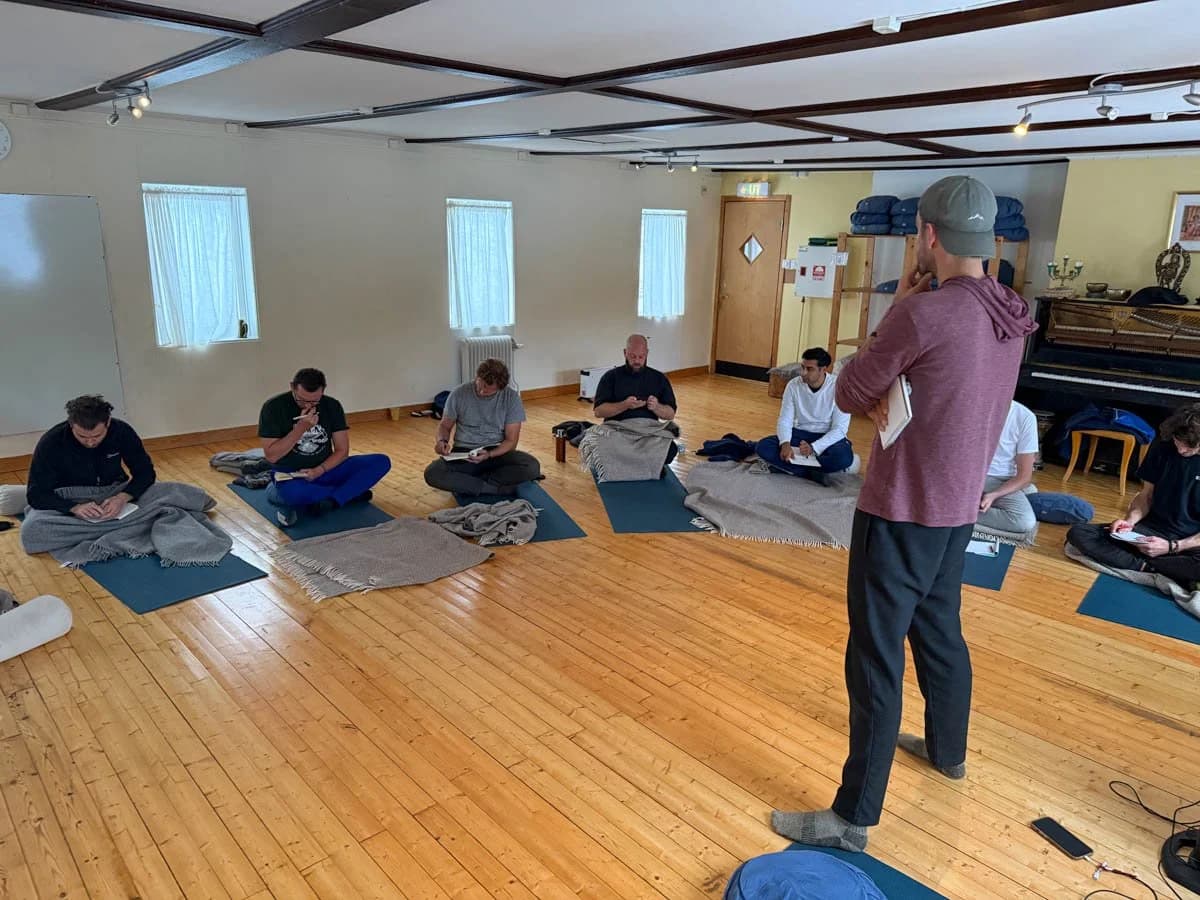
What a Transformational Retreat Really Costs (An Honest Breakdown)
By Jon Miksis · · 7 min read

Almost nobody in this industry will give you a straight answer about money. Prices sit behind application forms, "investment" replaces the word "cost," and you often cannot find out what a week actually runs until you are three emails deep with someone trying to sell you.
I find that irritating, so here is the honest version.
Since 2021 I have spent over $100,000 of my own money on retreats, coaching, courses, and books. I have attended 20+ transformational retreats around the world as a participant and helped facilitate six of them. I have seen the pricing from both sides of the table, including the cost sheets. This is what the money actually does.
One note up front: the numbers below are general market ranges I have observed across the retreats I have attended, facilitated, and researched. They are not quotes, and they are not my prices. Every host builds their own cost sheet.
The short answer
Most multi-day transformational retreats land somewhere between roughly $1,500 and $8,000 per person, before flights.
That is a wide band because "retreat" covers a lot of ground. The main things that move the number are length, location, group size, and how much of the facilitator's actual attention you get.
Typical price bands
| Format | Rough range | What that usually buys |
|---|---|---|
| Weekend, domestic, 2 to 3 nights | $800 to $2,500 | Shared or twin rooms, all meals, a small group, one or two facilitators |
| Week-long, domestic | $2,000 to $5,000 | Private or twin rooms, full programme, activities and guides included |
| Week-long, international | $3,000 to $8,000 | Exclusive-use property, small group, specialist facilitators, ground transport |
| Luxury or wellness-resort based | $8,000+ | Five-star property, spa treatments, medical or clinical add-ons |
| Small-group intensive, 4 to 8 people | $5,000 to $15,000+ | Near one-to-one facilitator attention, heavy pre-work and follow-up |
Two patterns are worth noticing. First, price does not scale neatly with length: a well-run three-day intensive can cost more than a loose seven-day trip, and be worth it. Second, the smaller the group, the higher the per-person cost, because the fixed costs get divided fewer ways. That is not a markup. That is arithmetic.

What you are actually paying for
When you see a five-figure price for six days, it helps to know what sits underneath it.
- Exclusive use of a property. Good retreats take over the whole venue so strangers are not walking through your circle. That costs considerably more than booking rooms.
- All meals, usually cooked for you. Three meals a day for a week, catering to six different dietary requirements, is a real line item.
- Ground transport. Airport transfers, plus moving the group around for activities.
- Activities and guides. Hikes with a qualified guide, boats, entry fees, equipment.
- Facilitation. The host's time on site, plus the design work beforehand and the follow-up afterward. Frequently more than one facilitator.
- Specialists. Breathwork facilitators, yoga teachers, bodyworkers, sound practitioners.
- The unglamorous stuff. Insurance, payment processing, contingency for weather and cancellations, and the host's own travel to get there.
Split across ten or twelve people rather than fifty, those numbers land where they land.
What is usually not included
Assume these are on you unless the page explicitly says otherwise:
- International flights. Almost never included, and usually the largest single line you add. If the retreat is in Europe and you are flying from the US, my site Europe Flight Club tracks transatlantic fares out of 26 US airports. The retreat price is fixed. This part is not, which makes it the one number here you can actually move.
- Travel insurance. Get it anyway. Also check whether the host requires it, because many do.
- The transfer from a major airport, if the retreat is remote. Some include it, some do not.
- Alcohol, where it is even present. Many transformational retreats are dry, which is usually a good sign.
- Spa treatments and optional extras.
- Tips for local staff. Budget something. The people cooking and cleaning for you are often the lowest paid part of the operation.
- Time off work, which for a lot of people is the largest real cost of the whole thing.
Add flights and insurance to any listed price before deciding whether it is affordable. A $3,000 retreat in Guatemala is a $4,200 decision from most of Europe.
The cheapest option is usually the most expensive
The three things that determine whether a retreat actually changes anything are group size, facilitator experience, and integration support. Those are also the three easiest things to cut to reach an attractive price.
A large group is cheaper to run per head. A newly certified facilitator costs less than someone who has held hundreds of hours of circle. No follow-up is free. Cut all three and you can advertise an appealing number.
You will have a pleasant week. You will come home, and within a fortnight your life will look exactly as it did before. That is not a bargain, that is a few thousand dollars for some good photographs.
I would rather pay more for eight people and someone who has genuinely done the work than less for forty and a schedule of nice activities. I have done both, with my own money, and the difference is not subtle.

How to tell whether a price is fair
Price on its own tells you almost nothing. These questions tell you a lot:
What is the group cap? If they will not give you a number, that is your answer. Twelve or under is where depth lives.
Who is facilitating, and what have they actually lived? Not what certification they hold. What have they been through, and how many rooms have they held?
What does a full day look like? Ask for the schedule. Look for both intention and space. If it is packed wall to wall, you are buying a conference. If it is vague, you are buying a holiday.
What happens after? Is there any integration support, a follow-up call, a group channel? If the relationship ends when the van leaves, most of what you paid for evaporates within a month.
What exactly is included? Get it in writing. Meals, transfers, activities, extras.
What is the cancellation policy? It should be written, specific, and scaled to notice. Deposits of 25 to 50% are normal and usually non-refundable, because the host has committed to the venue on your behalf.
I go deeper on this in how to choose a transformational retreat, which is the five questions I would ask before handing anyone money.
What it costs from the other side
For context, because it explains the pricing: hosting is not the margin business people assume.
A host is carrying accommodation, all food, transport, activities, specialist facilitators, their own travel, insurance, processing fees, and contingency, and committing to most of it before a single person has paid. A well-built retreat is priced to break even at roughly 60 to 70% capacity, which means the host is absorbing real risk on every launch.
Some retreats are very profitable. Plenty run at close to break-even, especially first ones. If you are curious about that side, or you are building one yourself, I have written the full breakdown in how to host a retreat.
So is it worth it?
It depends entirely on what you need, which is a real answer rather than a dodge.
If you are tired and you need a break, a retreat is a very expensive way to get one. Book a beach. You do not need a facilitator to lie in a hammock, and I have written about that distinction in retreat vs vacation. If the unresolved thing is your work rather than your energy, career change retreats are a narrower and usually better-value purchase.
If you are stuck, scattered, or successful on paper and quietly flat, a well-chosen retreat is one of the highest-leverage things you can spend money on. Not because of the location, but because of the compression: the right container, the right people, and several uninterrupted days is a combination almost impossible to manufacture in normal life.
Of the money I have spent since 2021, the retreats that changed things were never the cheapest ones, and they were also not the most expensive. They were the ones with a small group, a facilitator who had genuinely been through it, and someone who checked in on me six weeks later.
That is the thing worth paying for.
If you want help finding one that fits, or you are weighing up a specific retreat and want an honest read, get in touch. You can also see the retreats I host and recommend.
Frequently asked questions
How much does a transformational retreat cost?
Most multi-day transformational retreats land somewhere between roughly $1,500 and $8,000 per person before flights, depending on length, location, group size, and how much one-to-one facilitator attention is involved. Weekend formats and domestic retreats sit at the lower end. Week-long international retreats with small groups and experienced facilitators sit at the upper end.
Why are retreats so expensive?
Because you are buying exclusive use of a property, all your meals, ground transport, activities and guides, and a facilitator's full attention across several days, split across a deliberately small group. Small groups are the point, and they are also what makes the per-person number what it is. Halve the group and the fixed costs per head roughly double.
Are flights usually included in a retreat price?
Almost never. Assume the listed price excludes international flights, travel insurance, and usually the transfer from a major airport, unless it explicitly says otherwise. Budget those separately before you decide anything is affordable.
Is a cheap retreat worth it?
Sometimes, but check what was cut to reach the price. The usual casualties are group size, facilitator experience, and integration support, which are the three things that actually determine whether anything changes. A large group with a newly certified facilitator and no follow-up is cheap for a reason.
Can I pay for a retreat in instalments?
Most hosts offer payment plans, and many will discuss it privately even when it is not advertised. Ask. A host who cares about fit rather than volume will usually work with you on timing.
What is a fair deposit and cancellation policy?
A deposit of roughly 25 to 50% is normal, and it is usually non-refundable because the host commits to the venue on your behalf. Reasonable policies scale with notice, for example a partial refund beyond 60 days and none within 30. What matters is that the terms are written down and clear before you pay.
Hear when 2027 dates open
I run a small number of retreats a year. I email when dates open or a spot frees up, and not otherwise.
No spam, and unsubscribe any time. See how your details are handled in the privacy policy.