Men's Retreats for Entrepreneurs: What Actually Helps When You're Successful and Empty
By Jon Miksis · · 8 min read
There is a specific kind of man I meet at these retreats over and over.
He is in his thirties or forties. The business works. The revenue is fine, sometimes very good. He is respected, responsible, and the person everyone else leans on. And if you get him alone at eleven at night, he will tell you he cannot remember the last time he felt genuinely alive, and that he is slightly embarrassed to be complaining about a life he built on purpose.
If that is uncomfortably familiar, this is written for you.
I have spent over $100,000 of my own money since 2021 on retreats, coaching, and courses, mostly while running businesses. I have been the participant, and I now help facilitate men's retreats. The thing I got wrong for years was assuming the answer was another strategy.
The problem is not your strategy
Most founders reach for a mastermind first, because it is the familiar shape: a room of capable people, a set of frameworks, some accountability.
Masterminds are genuinely useful. I have done several and got real value. But if you have been through a few and you still feel flat, the diagnosis is probably wrong. You do not have a strategy problem. You have a capacity problem, and no amount of optimisation fixes it.
Functional burnout does not look like collapse. It looks like handling everything, competently, forever, while the volume on your own life slowly drops. Mind racing, breath shallow, sleep broken, patience thin, always on. You keep performing, so nobody intervenes, including you.
That state does not respond to a better system. It responds to time, silence, physical challenge, and other men being honest in front of you.
What a men's retreat does differently
A business retreat optimises the company. A men's retreat works on the man running it.
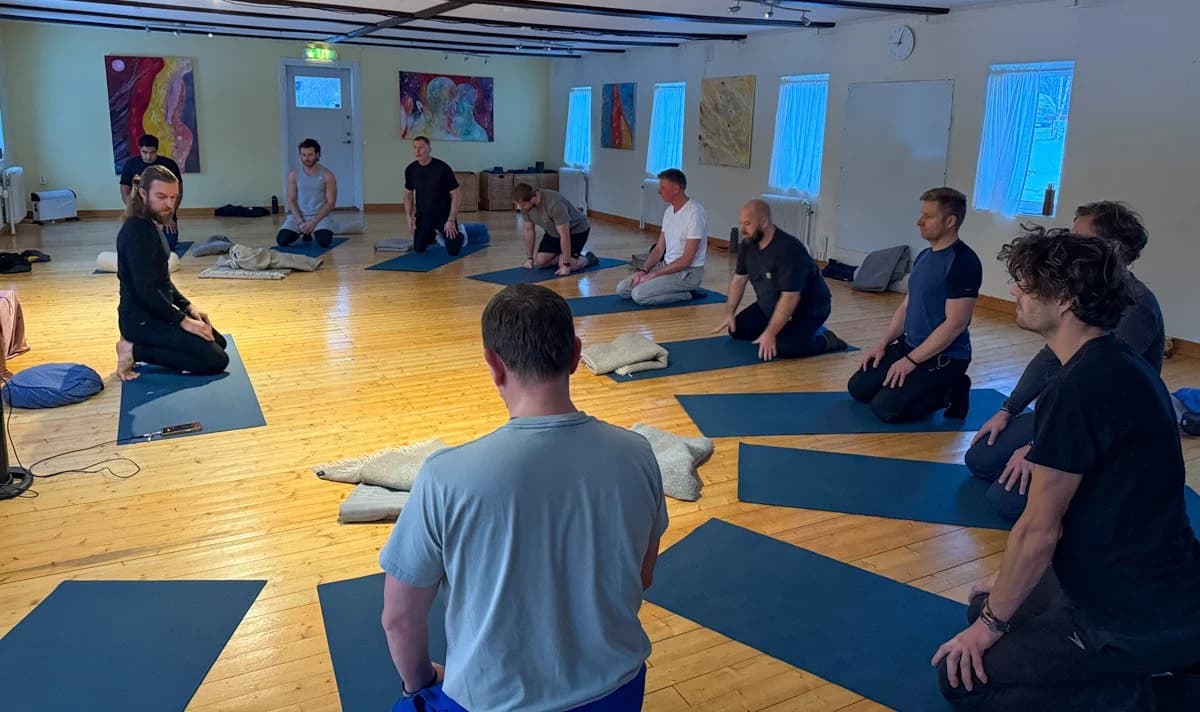
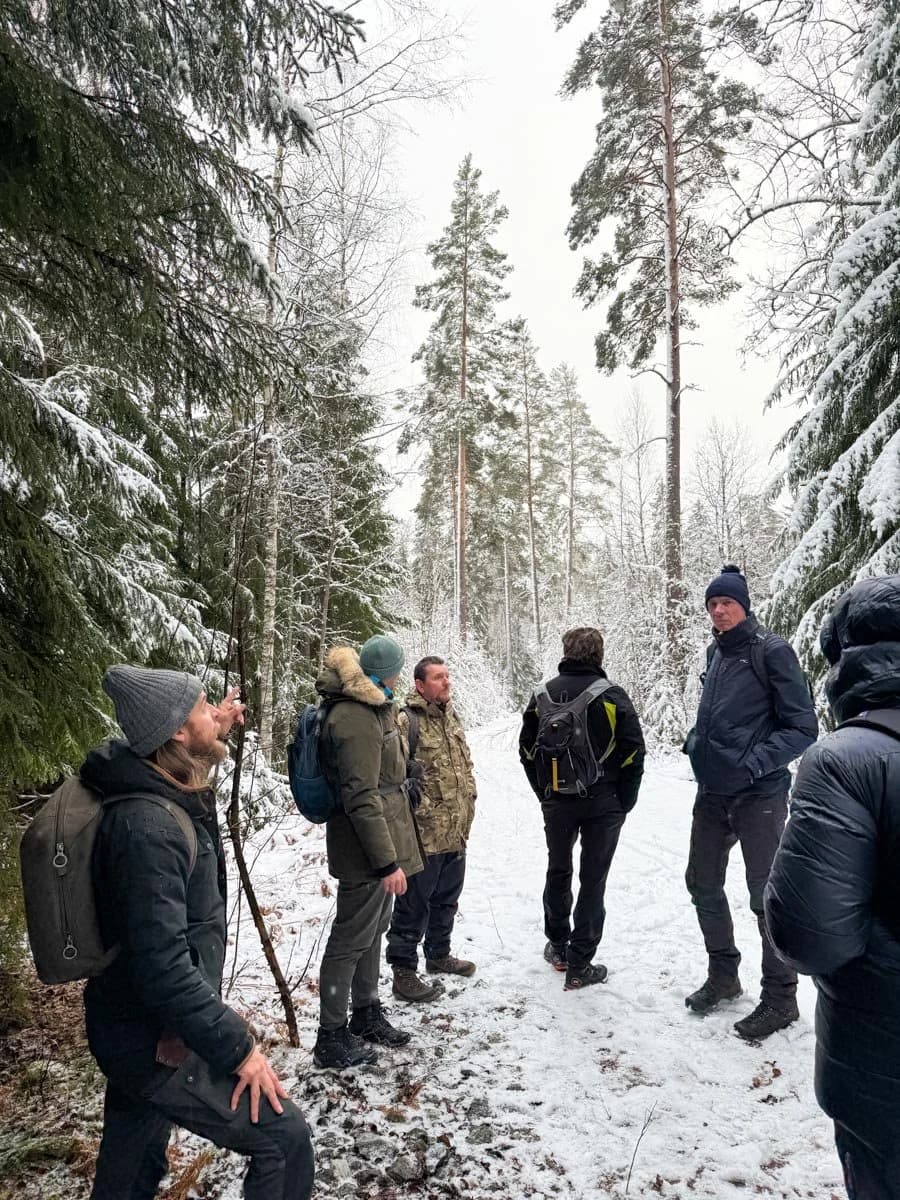
Concretely, that means most of the days are spent on things that have no obvious business application: breathwork, cold water, long walks, time alone, and structured honest conversation in a small group. There is usually no laptop. There is often no phone.
What comes out of it is not a strategy document. It is usually some version of: I have been running a life I designed six years ago for a person I am no longer, and I have not stopped long enough to notice.
That realisation is worth more than another quarter of tactics, and it is genuinely hard to reach at your desk.

What actually happens
Less than you think, and it hits harder than you expect.
The days are built around a rhythm rather than a curriculum. Movement and breathwork in the morning. A longer block of deeper work mid-morning when attention is best. Real space in the middle of the day. Something physical outdoors in the afternoon, often cold water. An evening circle. Nothing scheduled after dinner on at least a couple of nights.
Nervous system work is the part most high performers underestimate and then rate highest afterward. Breathwork and cold exposure are not wellness decoration. They are training. You are deliberately putting your body under controlled stress and practising staying regulated inside it, which is exactly the skill that has been quietly failing in board meetings and at home.
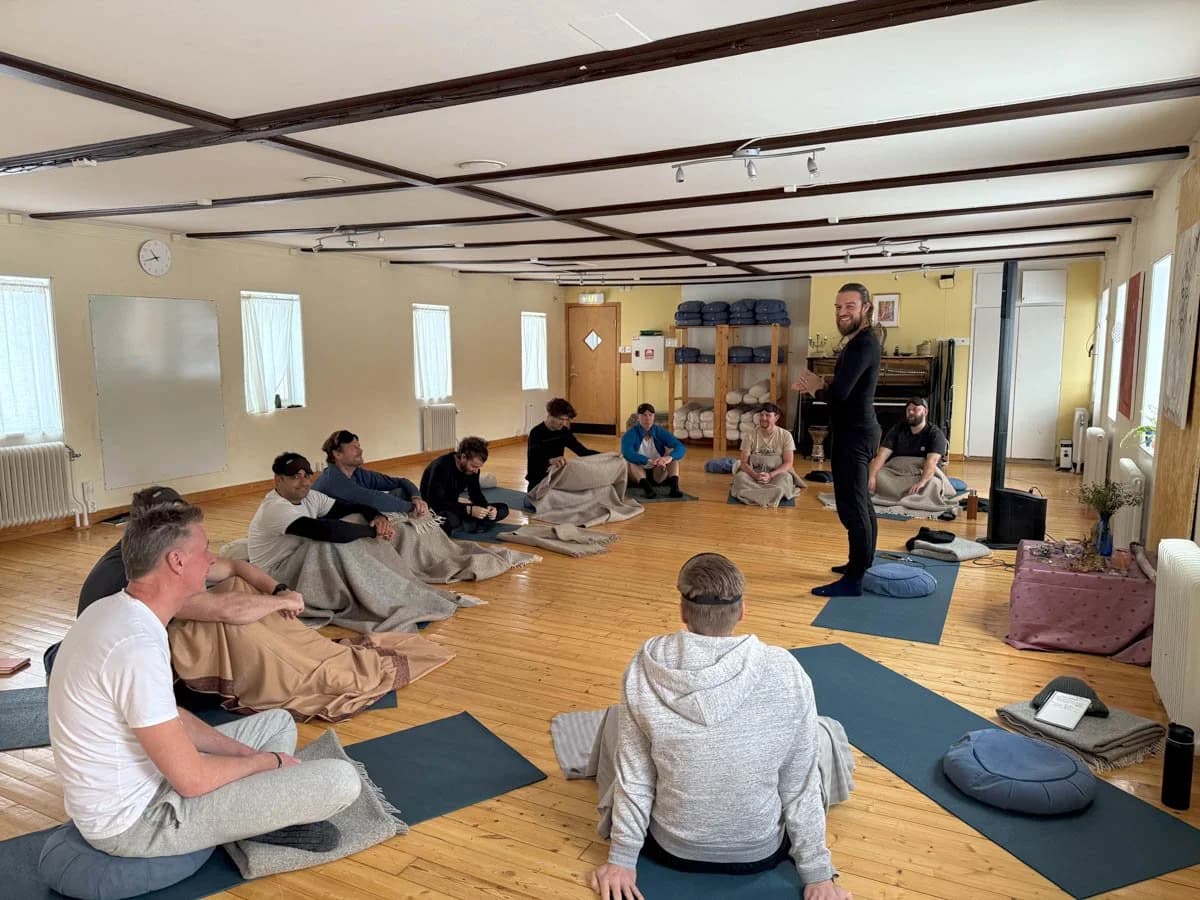
The circle is where the actual shift happens. A small group, an agreement that what is said stays there, and enough time that people stop performing. The first day everyone is still slightly presenting. By day two someone tells the truth about something hard, the room changes, and it turns out that every other man there has a version of the same thing.
That is the part nobody can replicate at a conference.
Why other men, specifically
Most successful men have colleagues, employees, clients, and a partner. Very few have peers who will tell them the truth.
Everyone in your professional life needs something from you. Your partner is inside the situation, and often carrying it with you. The result is that men in their forties routinely have nobody to say the hard thing to, and they conclude that the isolation is a personal failing rather than a structural one.
The isolation is structural rather than personal, and the data is fairly stark about it. The Survey Center on American Life's State of American Friendship survey found the share of American men reporting no close friends at all rose from 3% to 15% between 1990 and 2021, a fivefold increase, and that one in five unmarried men not in a relationship has none. Most men reading that recognise themselves somewhere on the curve.
Put eight men in a room with no stakes, no hierarchy, and an agreement to be honest, and something fairly simple happens: you find out your situation is normal. That sounds small. It is not. A large amount of the weight men carry is the belief that they are uniquely bad at something everyone else is managing fine.
Mastermind, men's retreat, or both
A quick way to tell which you need:
Go to a mastermind if the bottleneck is genuinely the business. You need positioning, pricing, hiring, or introductions, and you would act on good advice tomorrow.
Go to a men's retreat if you know roughly what to do and cannot make yourself care, or if the same pattern keeps showing up across your business, your health, and your relationship. That is not a strategy problem.
Go to both, in that order, if you are honest that you have been using work as the thing you are good at to avoid the things you are not.
The men I know who have done both usually say the same thing: the mastermind improved the company, and the retreat changed how they run it.

What to look for
The general rules for choosing a retreat apply, and I have written those up as five questions to ask before you book. A few things matter more when the room is founders and executives:
A group cap under twelve. With high performers this matters more, not less. Put twenty competitive men in a room and they will perform at each other for four days.
A facilitator who is not impressed by you. If the host is deferential to the room's credentials, they will not challenge anyone, and you will have an expensive weekend of being agreed with. You want someone who will call it when you are intellectualising.
Actual screening. Applications and a call. One man who came to network rather than work will flatten the container for everyone.
Real integration. A follow-up call, a group thread, something at six weeks. Founders are unusually good at having a profound experience and then burying it under a busy Monday. Without follow-through, that is exactly what happens.
No phones, stated clearly. If the schedule quietly allows for checking in with the office, half the room will, and the depth will not arrive.
Physical challenge that is real but not performative. Cold water and hard hikes serve the work. Suffering as a marketing device does not.
Be honest about the timing
One thing worth saying plainly: if you are actively in crisis, in the middle of a business collapse, a divorce in its acute phase, or genuine clinical depression, a retreat is not the first move. Therapy is. A good facilitator will tell you the same thing rather than take your deposit.
Retreats are extraordinary at moving someone from functioning-but-flat to genuinely alive. They are not a substitute for clinical support, and the honest hosts in this space are clear about that line.
What changes afterward
The realistic version, not the marketing version.
You will not come home a different person. What you will have is a clearer read on what is actually wrong, a nervous system with more room in it, two or three specific decisions you had been avoiding, and a handful of men you can call.
That last one is the part that surprises people. Six months later, most participants say the ongoing relationships mattered more than any single moment on the retreat. When men have been honest with each other about hard things, the trust is immediate and it lasts.
Whether it holds depends almost entirely on integration. What specifically changes on Monday, what comes out of your life, what goes in, and who is going to ask you about it in six weeks. Retreats that skip that produce a wonderful four days and very little else.
Where to start
If you have never done this, do not start with the most intense option you can find. A well-run three or four day retreat, a small group, and a facilitator who has been through it themselves will tell you plenty about whether this work is for you.
I have written the full picture of what this work involves in what men's retreats really are, and a region-by-region guide to finding one in the US. The men's retreats I facilitate run in the Swedish wilderness, and the next one I co-facilitate runs in February 2027.
If you want to talk through what actually fits your situation, including retreats that are not mine, tell me where you are at.
Frequently asked questions
What is the difference between a mastermind and a men's retreat?
A mastermind works on the business: strategy, numbers, introductions, accountability. A men's retreat works on the person running it: nervous system, honesty, direction, and the patterns that show up in how you lead. Both are useful. If you have done several masterminds and still feel flat, the problem is probably not strategy.
Are men's retreats for entrepreneurs just networking?
The good ones are not, though the relationships that form are often more valuable than anything in a formal networking setting. When men have been honest with each other about hard things, the trust is real. But if a retreat leads with the calibre of the room rather than the work, it is a mastermind with better scenery.
How much time do I need to take off?
Most formats run three to four days, Thursday through Sunday, which means one or two working days. Longer international retreats run five to seven. Take the phone-free part seriously: a retreat you attend while half-managing your inbox produces roughly nothing.
I'm not in crisis. Is this still for me?
That is the typical participant. Most men at these retreats are doing well by every external measure and quietly running on empty. Men in genuine crisis usually need therapy first, and a competent facilitator will say so.
What does a men's retreat for entrepreneurs cost?
Typically higher than a general men's retreat, often somewhere between roughly $3,000 and $10,000 for a multi-day format, because groups are smaller and facilitators more experienced. Some are considerably more. Judge it against the cost of another year at your current baseline rather than against a holiday.
Will I have to talk about my feelings?
You will be invited to, and nobody will force you. Participation is optional at any retreat worth attending. What actually happens is that around day two someone says something real, and most men who arrived planning to stay quiet find they want to talk.
Wondering whether this is your year?
Ten men, six days in the Swedish forest, February 18 to 25, 2027. Most of the men who come are doing fine by every external measure and quietly running on empty, and they leave with a clearer read on their next chapter than years of thinking produced. Tell me where you are at and I will reply personally. If I do not think it is the right fit for you, I will say so.
No spam, and unsubscribe any time. See how your details are handled in the privacy policy.